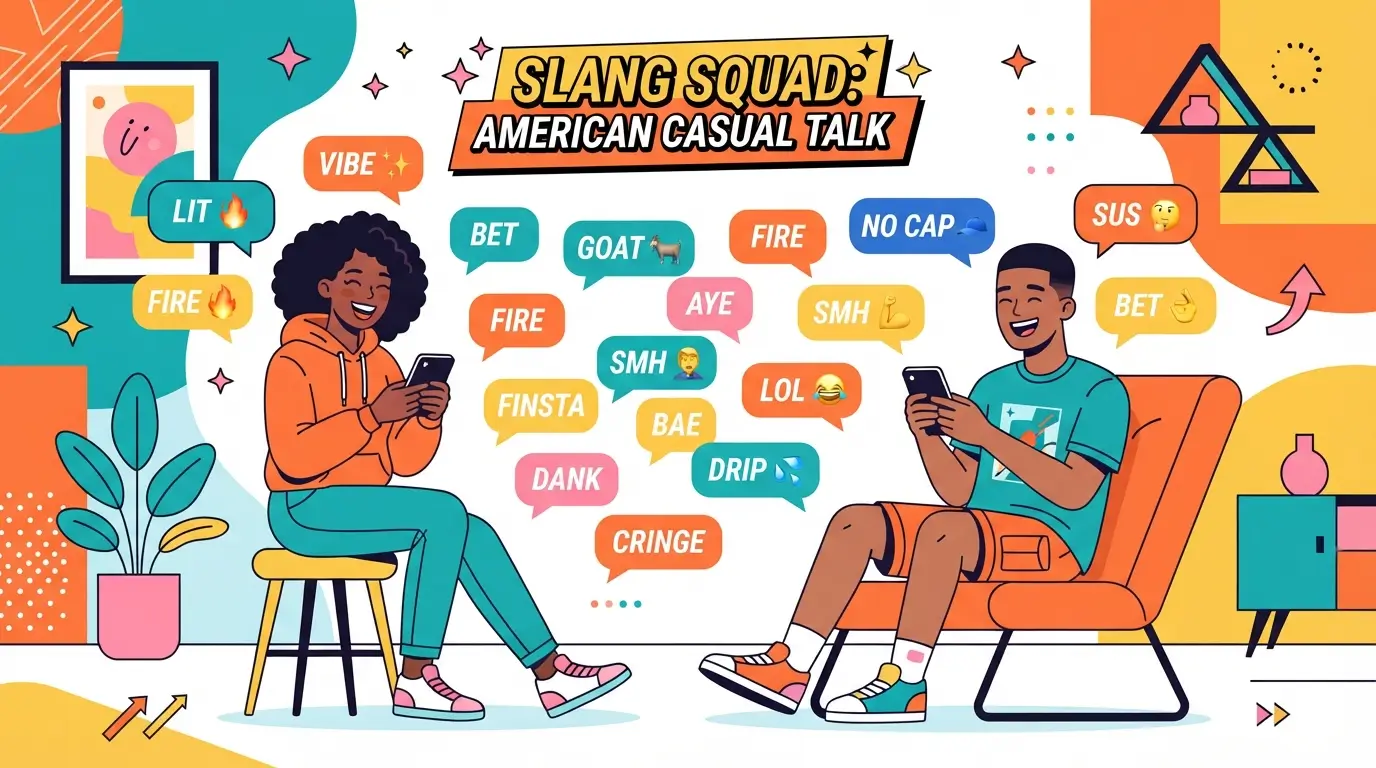
American slang words are informal terms and phrases that native speakers use in casual conversation instead of standard, formal English. Words like “lit,” “salty,” “ghosting,” and “no cap” are common examples. These expressions often come from music, movies, regional communities, workplace culture, and more recently, social media and internet trends.
Key Takeaways
- American English has hundreds of active slang terms used across different age groups and regions.
- Slang changes quickly, and new words become popular every year through social media.
- Some slang terms are used nationwide, while others are specific to certain cities or communities.
- Most American slang is casual and friendly, though a few terms are considered rude or inappropriate in formal settings.
- Learning common slang helps non native speakers and newcomers understand everyday conversations, movies, and TV shows.
What Does American Slang Mean?
American slang refers to informal words or phrases used instead of standard English. These terms usually:
- Describe emotions, reactions, or opinions in a casual way.
- Reflect a specific generation or subculture.
- Spread quickly through music, film, and social media.
- Change meaning or popularity over time.
Popular examples include:
- Lit
- No cap
- Salty
- Ghosting
- Extra
- Sus
- Vibe
Some expressions are understood across the entire country, while others belong to specific regions or online communities.
Quick Meaning Box
| Term | Simple Explanation |
| Lit | Exciting or excellent |
| No cap | No lie, being honest |
| Salty | Annoyed or bitter about something |
| Ghosting | Suddenly cutting off contact with someone |
| Extra | Overly dramatic or over the top |
| Sus | Suspicious or questionable |
| Vibe | The mood or atmosphere of a person or place |
Pronunciation
Most American slang terms are easy to pronounce:
- Lit /lit/
- No cap /noh kap/
- Salty /SAWL tee/
- Ghosting /GOH sting/
- Extra /EK struh/
- Sus /suhs/
- Vibe /vyb/
Where Does American Slang Come From?
American slang comes from many different sources.
Some terms have clear origins. For example, “ghosting” comes from the idea of disappearing like a ghost, without warning or explanation.
Other terms have unclear or debated beginnings. Words like “lit” existed in older forms of English before becoming popular again through hip hop culture and social media.
Many recent slang words spread quickly through platforms like TikTok, Instagram, and X, reaching millions of people within days.
History of the Term
Early Twentieth Century Jazz culture and city life introduced playful expressions like “cool” and “swell.”
Mid Century Military service, rock and roll, and youth counterculture added new terms to everyday speech.
Late Twentieth Century Hip hop, television, and regional dialects shaped popular phrases used across the country.
Social Media Era Platforms like TikTok and Twitter now create and spread new slang faster than ever before, sometimes within a single week.
How People Use It Today
American slang appears in:
- Text messages
- Social media posts
- Music and movies
- Everyday conversations
- Workplace chat among younger employees
Examples:
- “That party was so lit last night.”
- “No cap, this is the best pizza in town.”
- “Why are you being so salty about it?”
Slang Words by Category
Agreement and Excitement Lit, fire, bet, say less
Doubt and Suspicion Sus, shady, sketchy
Emotional Reactions Salty, triggered, big mad
Social Behavior Ghosting, simping, flexing
General Descriptions Extra, basic, vibe, mood
Regional American Slang
New York Slang Deadass, mad (meaning very), the city
Southern Slang Y’all, fixin’ to, bless your heart
California Slang Hella, stoked, chill
Midwest Slang Pop (for soda), ope, uff da
Every region has developed its own casual expressions, often shaped by local history and culture.
Examples in Everyday Conversation
- “This song is fire.”
- “I’m not going to lie, I’m feeling a little salty.”
- “He totally ghosted me after the first date.”
- “That outfit is extra, but I love it.”
- “Something about this deal feels sus.”
Text Message Examples
- That test was brutal, no cap.
- Running late, my bad.
- This playlist slaps.
- He’s been acting sus lately.
- Big mood honestly.
Social Media Caption Examples
- Living my best life, no cap.
- Feeling the vibe today.
- Zero chill, all energy.
- Main character moment.
- Deadass the best day ever.
Is It Positive or Negative?
Most American slang is neutral or positive, used to express excitement, humor, or agreement. A smaller number of terms, like “salty” or “shady,” describe negative emotions or behavior, but they are still considered playful rather than offensive in casual settings.
Who Uses This Slang?
American slang is used by:
- Teenagers and young adults
- College students
- Content creators and influencers
- Coworkers in casual environments
- Family members in relaxed conversations
Different generations often prefer different slang, and terms popular with one age group may sound outdated to another.
Similar Slang Words
- Lit means exciting or excellent.
- Fire means impressive or very good.
- Bet means yes or agreed.
- Salty means annoyed.
- Sus means suspicious.
Opposite Expressions
Slang does not always have direct opposites, but related contrasts include:
- Basic, meaning boring or unoriginal, as an opposite of extra.
- Chill, meaning calm, as an opposite of salty.
- Legit, meaning genuine, as an opposite of sus.
Common Mistakes
- Using outdated slang and assuming it is still current.
- Mixing regional slang with terms from a different area.
- Using casual slang in professional emails or academic writing.
When NOT to Use It
Avoid American slang in:
- Academic papers
- Business reports
- Job interviews
- Formal presentations
A sentence like “This proposal is lit” would confuse readers in a professional setting.
Fun Facts
- New slang can trend and disappear within a few months.
- Many popular terms originate from African American Vernacular English and hip hop culture.
- Slang dictionaries are updated every year to keep up with new expressions.
- Some older slang words return to popularity after appearing in movies or shows.
- Crossword puzzles and trivia games often feature classic American slang.
Frequently Asked Questions
What is the most popular American slang word right now?
Popularity changes quickly, but terms like “no cap,” “lit,” and “sus” have remained widely used across social media and everyday conversation in recent years.
Why does American slang change so fast?
Social media platforms allow words to spread to millions of people within days, which speeds up how quickly new slang appears and how quickly older slang fades.
Is it okay for non native English speakers to use slang?
Yes, understanding slang helps with everyday conversations, but it is usually best to use it casually with friends rather than in formal or professional situations.
Where can I learn more slang terms and their meanings?
There are dedicated resources online that explain slang meanings, origins, and examples in detail, which can be especially helpful for learners and writers. For more American slang words and meanings, you can visit SlangWordz.
Final Thoughts
American slang shows how living and creative the English language really is. From classic terms like “cool” to newer expressions like “no cap” and “sus,” these words reflect culture, humor, and the fast pace of modern communication.
Some slang is regional, some is generational, and some spreads worldwide through social media in a matter of days. Learning these expressions makes it easier to understand conversations, movies, music, and online content, and it adds personality to everyday language.

Olivia Carter specializes in explaining word meanings, internet slang, and cultural phrases in a simple way. Her goal is to make learning easy for every visitor at slangwordz.com