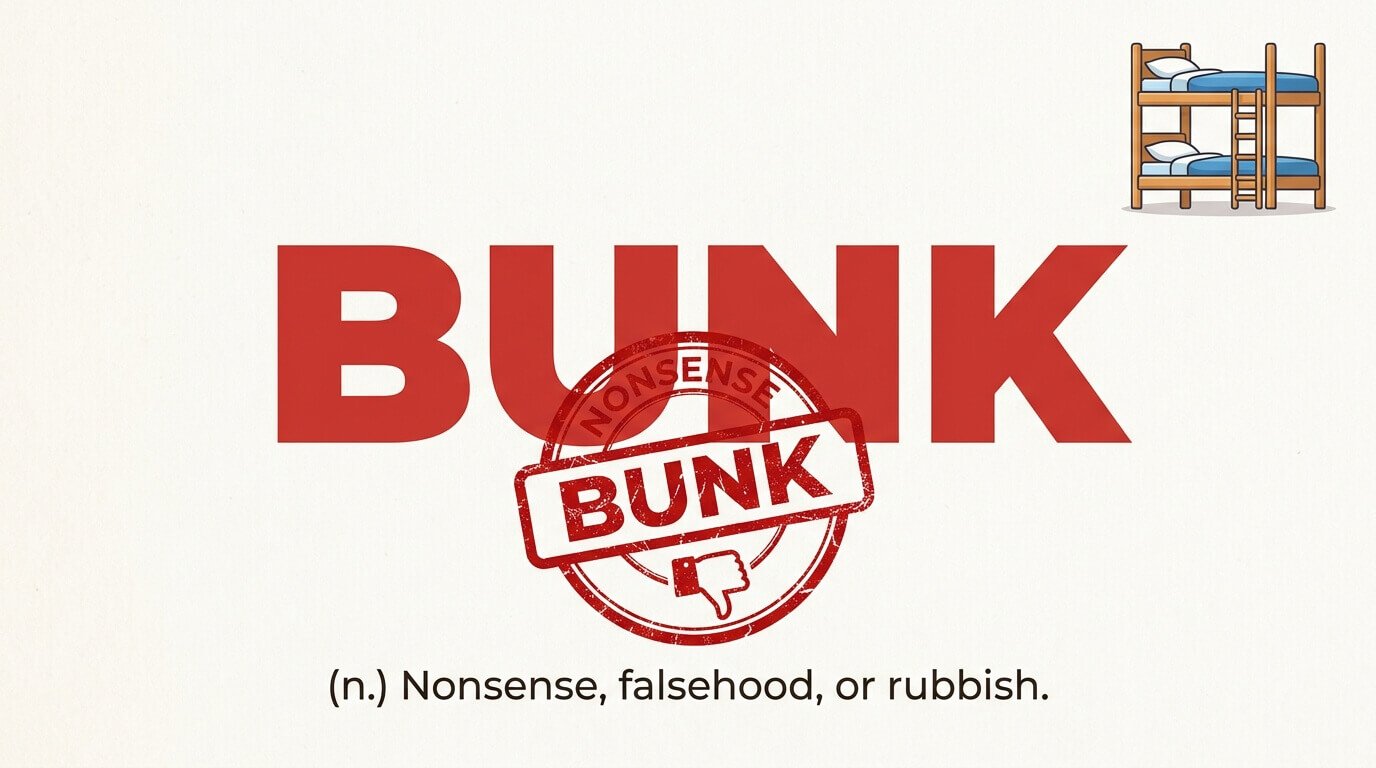
Bunk slang means something is fake, nonsense, or low quality like a bunk excuse or bunk weed. It can also mean to run away (“do a bunk”) or skip class (“bunk off”) in British slang, or simply refer to a bunk bed. Context decides which meaning fits.
Key Takeaways
- Core meaning: fake, nonsense, or of poor quality (e.g., “that’s bunk”)
- Comes from “bunkum,” a 19th century American word for empty political talk
- In British slang, “bunk” also means to skip school or flee a place
- In drug slang, “bunk” describes weak, fake, or cut product
- Tone is almost always negative or dismissive
- Still used today online and in everyday speech, especially in the US and UK
People search for “bunk slang” because the word pops up in a lot of different places and doesn’t always mean the same thing. Someone might call an excuse “total bunk.
” A Brit might say a kid “bunked off” school. A buyer might complain their weed was “bunk.” A traveler might sleep in the “bottom bunk” of a hostel room.
That’s a lot of ground for one small word to cover.
What Does Bunk Slang Mean?
Bunk slang most often means something is false, fake, or worthless. It’s a short, punchy way to reject a claim, a product, or an excuse without a lot of extra words.
<cite index=”7 1″>This meaning traces back to “bunkum,” which started as a word for empty political talk before broadening to cover any kind of insincere or hollow claim.</cite>
There are a few other meanings worth knowing, since they come from different word histories that just happen to share the same spelling:
- A bunk bed or sleeping berth the plain, literal furniture meaning, with no slang attached.
- British slang for skipping class “bunking off” school or work.
- British slang for fleeing “doing a bunk” means leaving suddenly, often to dodge trouble or a bill.
Quick Meaning Box
| Meaning | Simple Explanation |
| Fake or nonsense | Something untrue, exaggerated, or not to be trusted |
| Bunk bed | A stacked bed, usually with a top and bottom mattress |
| Bunk off (British) | To skip school or work without permission |
| Do a bunk (British) | To leave suddenly, often to avoid trouble |
| Bunk (drug slang) | A weak, fake, or low quality substance |
Pronunciation
Bunk is pronounced buhngk (rhymes with “junk” and “trunk”). It’s one syllable, and the spelling never changes across its different meanings.
Where Does Bunk Slang Come From?
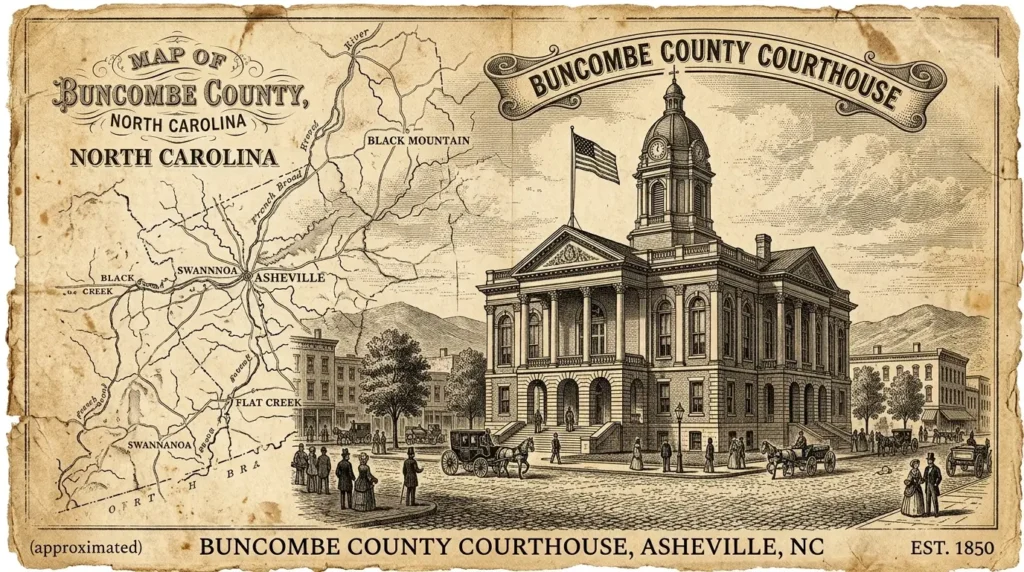
The “nonsense” meaning of bunk slang comes from bunkum, a word tied to a real moment in U.S. political history.
<cite index=”6 1″>Around 1820, North Carolina congressman Felix Walker gave a long, irrelevant speech in the House of Representatives, insisting he needed to say something for the record just to please voters back in his home district of Buncombe County.
</cite> <cite index=”7 1″>His colleagues found the speech pointless, and “buncombe” later spelled “bunkum” became a word for empty, insincere talk.</cite>
<cite index=”6 1″>Merriam Webster records the first known use of “bunkum” in this sense in 1838</cite>, and <cite index=”5 1″>the phrase “talking to Bunkum” appears in print as early as September 1828.
</cite> Over time, people shortened “bunkum” to “bunk,” and by the early 1900s, “bunk” on its own carried the same “nonsense” meaning.
</cite> The British meanings bunking off school and doing a bunk <cite index=”11 1″>grew out of that same sleeping/lodging sense of bunk, appearing in British slang starting around 1865 to 1870.</cite>
So while it looks like one word, bunk slang is really two (or three) separate word histories that collided into the same spelling.
The exact moment “bunk” fully split off from “bunkum” as its own standalone slang term is unclear, but by 1900 it was common enough to stand on its own.
History of the Term
The nonsense meaning of bunk stuck around through the 20th century in newspapers, everyday speech, and eventually pop culture. It never really went out of style it just quietly kept working as a casual way to call something out as fake.
The British meanings (bunking off, doing a bunk) have stayed mostly regional, popping up constantly in UK conversation, TV, and news but staying less common in American English.
<cite index=”10 1″>Writers have kept using “bunk” and its family of words well into recent years, including in major outlets discussing everything from misinformation to novels about the word’s own history.</cite>
The drug related meaning of bunk grew separately, out of general slang culture rather than any single traceable event.
There’s no clear evidence of a major “resurgence” moment for bunk it’s more of a steady, low key slang term that never fully disappeared from any of its uses.
How People Use It Today
Bunk shows up across texting, social media, and everyday talk, mostly in its “fake or nonsense” sense.On X and Reddit style comment threads, people call bad arguments or misleading headlines “bunk” as a quick dismissal.
On forums where people discuss products or purchases, “bunk” is a common complaint word for anything that turns out to be fake or underwhelming.
It’s less of a trending hashtag term and more of a reliable, everyday word the kind that doesn’t need a platform to explain it.
Bunk Slang Meaning and Definition
At its core, bunk slang means fake, false, or worthless. “Define bunk slang” and you’ll land on the same answer almost everywhere:
something that’s not genuine or not to be trusted. It works as an adjective (“that’s a bunk deal”) or a flat statement (“bunk”).
Bunk Slang Origin
As covered above, the origin traces back to “bunkum,” born out of a rambling 1820s congressional speech. The word got shortened to “bunk” by around 1900, and the meaning empty, insincere, or false carried over intact.
Bunk Slang for Nonsense
When someone calls something “bunk” to mean nonsense, they’re using the word closest to its original sense.
“His alibi is bunk” or “that whole theory is bunk” both mean the same thing: it doesn’t hold up, and it’s not worth believing.
Bunk Slang Drug and What Bunk Means for Drugs
In drug slang, “bunk” describes a substance that’s fake, weak, or misrepresented for example, weed that’s been sold as high quality but turns out to be poorly grown, stale, or mixed with filler.
Calling something “bunk” in this context is a complaint about being ripped off, not a description of any specific drug. It’s simply the “fake or worthless” meaning of bunk applied to a purchase.
Bunk Cali Slang
“Bunk” shows up in California slang the same way it does elsewhere as a way to call out something fake or low effort, including in conversations about buying weed, which is legal for adult use in California.
Top Bunk Slang and Bottom Bunk Slang

“Top bunk” and “bottom bunk” aren’t really slang on their own they’re just the plain, literal names for the upper and lower beds in a bunk bed.
People sometimes use “I called top bunk” the way they’d use “shotgun,” as a quick claim on the better spot, which gives the phrase a light slang feel in casual conversation, especially among kids, campers, and college roommates.
Bunkers Meaning Slang

It’s a playful, exaggerated way to say someone (or something) is wild or ridiculous, and it’s a separate word from the “fake” meaning of bunk, even though it shares the same root sound.
Bunky Meaning Slang
“Bunky” is an informal, affectionate term for a roommate or bunkmate someone you share a room or bunk bed with, common in camp, dorm, or military settings.
It’s a casual, friendly nickname rather than a criticism, which puts it in a completely different tone bucket than “that’s bunk.”
Bunk Up Meaning Slang
generally means to share a bed or sleeping space with someone, or to squeeze in together when space is tight like two campers “bunking up” in one tent.
Bunk British Slang
British English gets the most mileage out of bunk slang. Beyond the general “nonsense” meaning shared with American English, British speakers use “bunk off” for skipping school or work, and “do a bunk” for leaving suddenly, often to dodge a bill, a punishment, or an awkward situation.
<cite index=”14 1″>”Do a bunk” specifically means to escape or flee, especially under circumstances that look bad.</cite>
Bunk Gay Slang
There isn’t solid, widely documented evidence of “bunk” carrying a distinct meaning specific to LGBTQ+ slang.
Any use of “bunk” in that context most likely just borrows the general “fake” or “bunkmate” meanings rather than representing a separate, established term.
Examples in Everyday Conversation
- “Don’t believe him, that excuse is total bunk.”
- “I called top bunk before we even got to the cabin.”
- “She did a bunk before anyone noticed she’d left.”
- “That review sounds bunk nobody’s product is that perfect.”
- “He bunked off math class again this week.”
- “The whole diet plan turned out to be bunk.”
- “That was some bunk advice, honestly.”
- “Bottom bunk is mine, I called it first.”
- “The landlord did a bunk owing three months’ rent.”
Text Message Examples
- “lol that story is so bunk, tell the truth”
- “top or bottom bunk when we get there?”
- “he bunked off again today smh”
- “heads up the deal sounds bunk, don’t send money”
- “we’re bunking up bc the hotel messed up the booking”
- “she did a bunk mid shift lol”
- “that advice was bunk, ignore it”
- “bunky said she’s running late”
- “that whole rumor is bunk btw”
- “guy did a bunk before paying his tab”
Social Media Caption Examples
- Instagram: “Called top bunk and I’m not moving 😴”
- TikTok: “POV: your excuse is so bunk everyone can tell”
- X: “That headline is bunk, read the actual report”
- Threads: “Bunking off responsibilities today, no regrets”
- Facebook: “Landlord did a bunk, still waiting on my deposit”
- Instagram: “Bunk bed setup finally done 🛏️”
- TikTok: “That review was so bunk, don’t trust it”
- X: “Half of what’s trending right now is bunk”
- Threads: “Bunkies for the weekend, roommate era 🙌”
- Facebook: “Kids bunking off school on a snow day, understandable”
Is It Positive or Negative
Calling something “bunk” is a dismissal it says the thing doesn’t deserve trust or attention.
The other meanings are more neutral. “Top bunk,” “bunky,” and “bunking up” are casual and friendly, not insults.
Misunderstandings can happen when someone unfamiliar with British slang hears “bunk off” and assumes it’s rude or aggressive, when it’s really just informal.
Who Uses This Slang?
The British meanings (bunk off, do a bunk) are everyday vocabulary across the UK, used by students, workers, and adults alike. “Bunky” tends to show up most in camp, dorm, and military settings, where sharing a bunk is common.
Similar Slang Words
| Slang | Meaning |
| Bogus | Fake or not genuine |
| Baloney | Nonsense, untrue talk |
| Sus | Suspicious or untrustworthy |
| Cap | A lie or exaggeration |
| Rubbish (British) | Nonsense or poor quality |
| Cheesy/fake | Not authentic |
Opposite Words
- Legit genuine, real, trustworthy; the direct opposite of calling something bunk
- Solid reliable and dependable
- On the level honest and straightforward
- Top notch high quality, the opposite of the “worthless” meaning of bunk
Common Mistakes
People sometimes confuse “bunk” with “bunco” or “bunko,” a separate word meaning a swindle or con game. <cite index=”5 1″>Bunk and bunkum are actually etymologically unrelated to bunco, even though they sound alike and both relate to deception.
</cite> Another common mix up is assuming “bunk off” and “do a bunk” mean the same thing bunking off is about skipping an obligation like school, while doing a bunk is about leaving a place suddenly, often for good. Some people also misspell it as “bunck” or “bunc,” which aren’t standard spellings.
When NOT to Use It
Skip bunk slang in professional emails, school assignments, business reports, or any formal writing.
Calling a client’s proposal “bunk” or telling a manager an idea is “bunk” reads as dismissive and unprofessional, even if that’s not the intent. In formal settings, swap it for words like “inaccurate,” “unsubstantiated,” or “not credible,” which say the same thing without the casual edge.
Fun Facts
- <cite index=”6 1″>”Bunkum” traces back to a real congressman, Felix Walker, and a real county, Buncombe County, North Carolina.</cite>
- <cite index=”4 1″>”Bunk” as a sleeping berth is much older than the “nonsense” meaning, dating to 1758 versus 1900.</cite>
- <cite index=”3 1″>Merriam Webster defines bunkum simply as “insincere or foolish talk; nonsense.”</cite>
- <cite index=”3 1″>One alternative theory links “bunkum” to an Irish/Scots Gaelic phrase, though other etymologists have disputed that connection.</cite>
- The word “debunk” grew directly out of “bunk,” meaning to expose something as false.
- Bunk beds and “bunk” the slang word share a root idea (a bunk/bunker as a seat or berth), even though their modern meanings went very different directions.
Frequently Asked Questions
1:What is bunk slang for drugs?
In drug slang, calling something “bunk” means it’s fake, weak, or not what it was sold as like weed that turns out to be low quality or cut with filler.
The word here is just the general “fake or worthless” meaning of bunk applied to a drug transaction.
2:Is bunk British slang?
Bunk is used in both American and British English, but two extra meanings are mostly British: “bunk off,” meaning to skip school or work, and “do a bunk,” meaning to leave suddenly, often under bad circumstances.
The core “nonsense” meaning of bunk is common on both sides of the Atlantic. So it’s not exclusively British it’s just that the UK has extra slang uses layered on top of the shared meaning.
3:What does “she’s done a bunk” mean?
“She’s done a bunk” means she left suddenly and without telling anyone, often to avoid a problem, a bill, or an awkward situation.
It’s British slang, and it usually implies the departure was unexpected or a little suspicious. For example, a tenant who moves out overnight without paying rent would be described as having “done a bunk.”
4:What is the meaning of bunk?
Bunk has a few meanings depending on context: nonsense or something fake, a stacked bed, or (in British slang) skipping class or fleeing a place.
Always check the surrounding sentence to know which meaning applies, since the word covers several unrelated ideas.
5:Is “bunk” the same as “bunkum”?
Yes, in the “nonsense” sense, “bunk” is simply a shortened form of “bunkum.” Both words mean the same thing insincere, empty, or false talk
and “bunk” became the more common everyday version over time.
Final Thoughts
Bunk slang packs a lot into one small word. At its heart, it’s about calling something out as fake, false, or not worth trusting a habit that goes all the way back to a rambling political speech in 1820.
From there, it branched into British slang for skipping school or fleeing a scene, plus a completely separate, literal meaning tied to bunk beds.Once you know which meaning is in play, the word is easy to use correctly.
Save it for casual conversation, texting, or social media, and reach for more formal words when the setting calls for it.

Olivia Carter specializes in explaining word meanings, internet slang, and cultural phrases in a simple way. Her goal is to make learning easy for every visitor at slangwordz.com