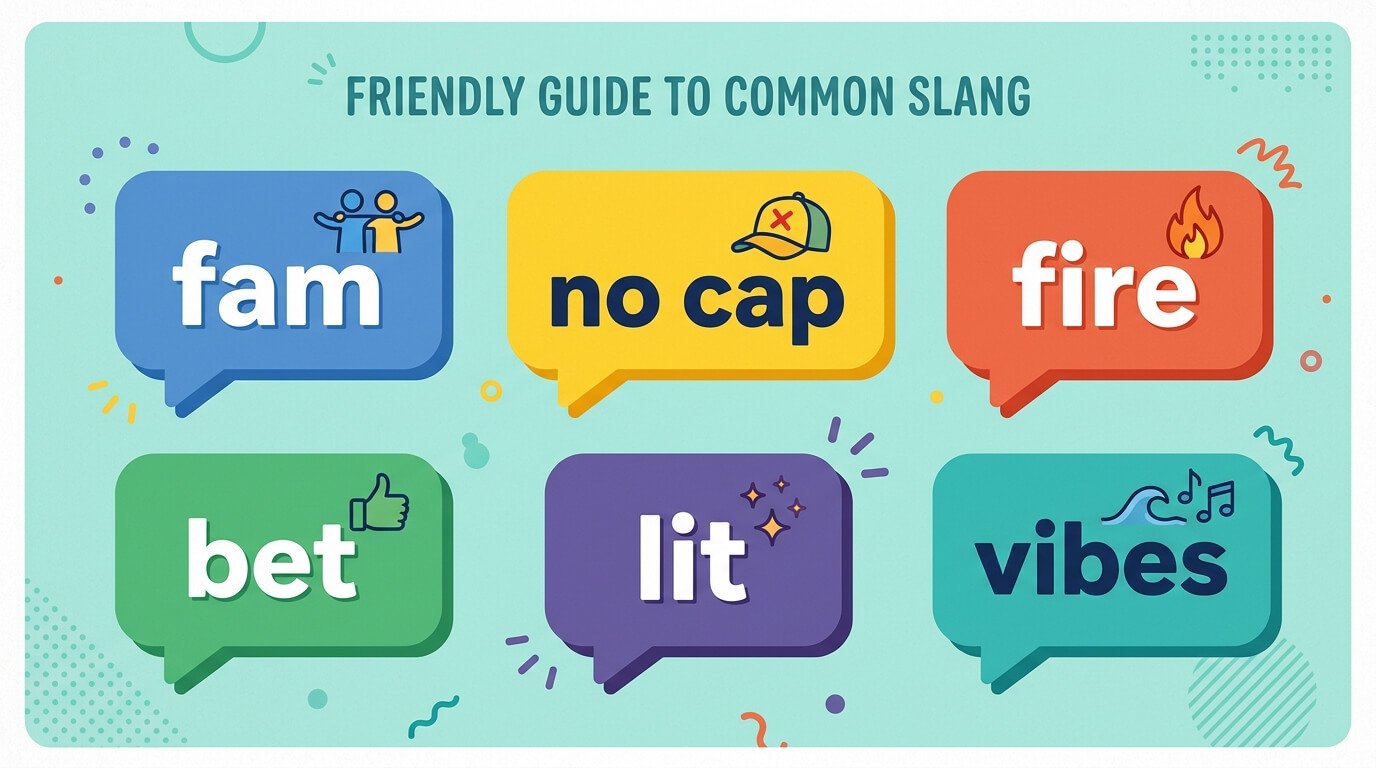
Hood slang refers to informal words and phrases that started in city neighborhoods, especially Black American communities, and later spread through hip hop, texting, and social media. It covers everything from greetings and insults to newer terms like YN and DP, and it’s still evolving today.
Key Takeaways
- Hood slang is informal language rooted in urban neighborhood culture, especially African American Vernacular English (AAVE).
- Many terms have roots going back decades, with some tracing to the 1960s and 1970s.
- Hip hop music has been the biggest driver of hood slang spreading beyond local neighborhoods.
- TikTok, Instagram, and texting have pushed newer hood slang terms like YN and DP into mainstream use.
- The tone can be playful, affectionate, or insulting depending on the word and the context.
- Not all hood slang is appropriate for school, work, or formal writing.
People search for “hood slang” because they keep running into words they don’t recognize. Maybe it showed up in a rap song, a TikTok comment, or a text from a friend. Hood slang is everywhere online right now, and it can be hard to keep up if you didn’t grow up around it.
This kind of language usually comes from city neighborhoods, often called “the hood” for short. It’s shaped by everyday life, music, and community.
A lot of it comes from African American Vernacular English (AAVE), and hip hop has carried it far beyond any single city or block.
Some hood slang words have been around for generations. Others are brand new, born on TikTok or in group chats last year.
That mix is part of why the topic is confusing. A word your older cousin used in the 1990s might mean something totally different to a teenager scrolling TikTok today.This guide breaks down what hood slang actually means, where it comes from, and how people use it now.
You’ll get real examples, common terms explained one by one, and tips on when this kind of language fits and when it doesn’t. By the end, you won’t need to search anywhere else to understand it.
What Does Hood Slang Mean?
Hood slang means informal words and expressions that come from city neighborhood culture, often shaped by Black American communities and hip hop. It’s not one fixed list of words it’s a living, changing style of speech.
The word “hood” itself is short for “neighborhood.” Over time, it came to describe a specific type of urban community, often workin class and often majority Black or Latino.
Hood slang grew out of daily life in those communities: how people greeted each other, joked around, warned each other, or talked about money, relationships, and struggle.
Some hood slang words describe people (“mark,” “YN”), some describe actions (“backdoor,” “K” as a reply), and some are just general urban terms for everyday things. A single word can also carry different meanings depending on the city, the generation, or the platform where it’s used.
Quick Meaning Box
| Meaning | Simple Explanation |
| Informal neighborhood language | Casual words and phrases from urban communities |
| Hip hop influenced speech | Slang popularized through rap lyrics and music culture |
| AAV rooted expressions | Terms shaped by African American Vernacular English |
| Social media slang | Newer hood slang spread through TikTok, X, and texting |
Pronunciation
“Hood slang” is pronounced hood (rhymes with “good” or “wood”) plus slang (rhymes with “bang”). There’s no tricky pronunciation here it’s said exactly how it looks.
Where Does Hood Slang Come From?
Hood slang comes from city neighborhoods, particularly Black American communities, where everyday speech developed its own rhythm, shortcuts, and expressions. Much of it is tied to African American Vernacular English.
The exact origin of any single hood slang word is often unclear, since slang usually spreads by word of mouth long before anyone writes it down.
What’s clearer is the pattern: neighborhoods develop their own way of talking, musicians from those neighborhoods put that language into songs, and the songs carry the words to a much bigger audience.
Hip hop is the clearest bridge here. As rap music grew from local block parties into a national and then global genre, the slang inside the lyrics traveled with it. Words that once stayed within a few city blocks ended up in songs played across the country.
History of the Term
Hood slang has roots that stretch back decades, with some words and phrasing patterns traced to the 1960s and 1970s in Black urban communities. That era saw major cultural shifts, and language shifted along with it.
By the 1980s and 1990s, hip hop had turned into one of the most popular music genres in the world, and it pulled hood slang along with it. Words that started in specific cities New York, Chicago, Los Angeles, Atlanta became familiar to listeners who had never set foot in those neighborhoods.
The internet changed the pace of everything. Instead of slang traveling through radio play and word of mouth over months or years, social media can spread a new term overnight.
TikTok especially has caused older hood slang to resurface and brand new terms to appear almost weekly. Some words fade fast; others stick around and become part of everyday texting for millions of people.
Hood Slang Words
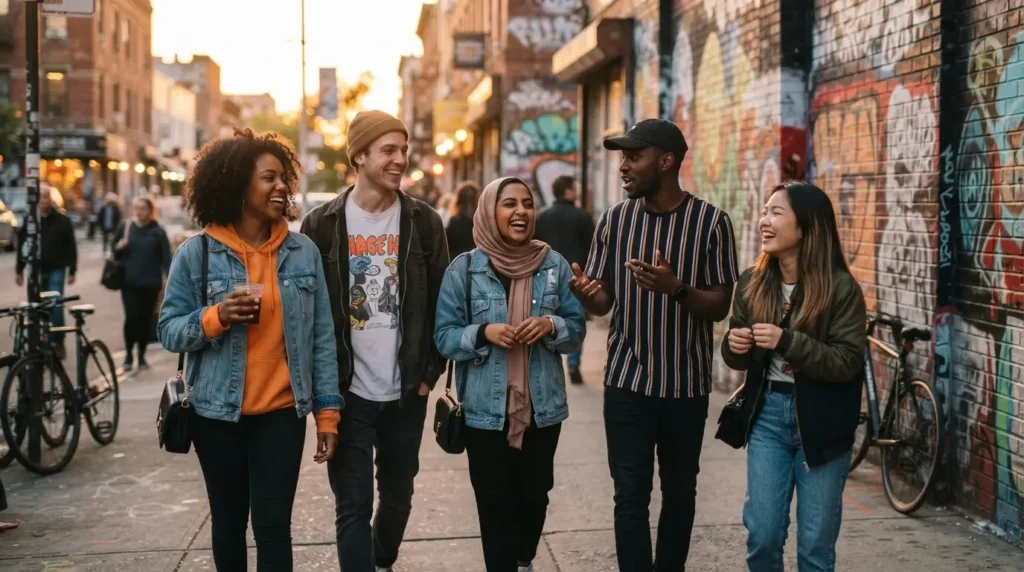
Hood slang words cover a wide range of everyday life money, people, feelings, and situations. There isn’t one master list, but certain words show up again and again across cities and platforms.
Common categories include words for money (“bread,” “bands”), words for a close friend (“bro,” “fam”), words for being impressive or cool (“fire,” “clean”), and words for trouble or danger (“beef,” “heat”).
New hood slang words tend to build on this same pattern: short, punchy, and easy to drop into a sentence without slowing down the conversation.
Hood Slang Phrases
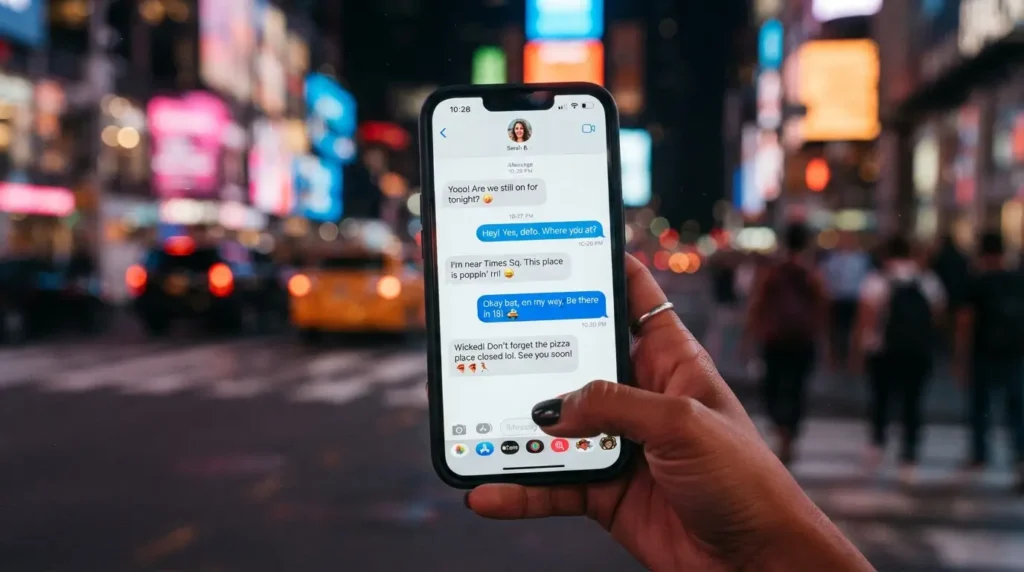
Hood slang phrases are short expressions, often more than one word, used to react to something or describe a situation. They tend to carry more emotional weight than single slang words.
Examples include phrases like “on God” (used to swear something is true), “no cap” (meaning no lie), and “it’s giving…” (used to describe a vibe or feeling about something).
These phrases work almost like verbal punctuation they add emphasis or attitude to whatever is being said.
Hood Slang Insults
Hood slang insults are informal put downs used to tease, mock, or call someone out. Some are lighthearted between friends, while others are meant to genuinely offend.
The tone usually depends on who’s talking and how they say it. Between close friends, an insult like this can be a joke.
Said with a serious tone to a stranger, the same word can start a real argument. Context always matters more than the word itself.
Hood Slang Translator
A hood slang translator is basically what a guide like this one does it explains unfamiliar slang words in plain English so anyone can understand them. There isn’t one official translator app that covers every term, since slang changes too fast for any single database to stay current.
The most reliable approach is combining a few sources: a slang dictionary site, checking how the word is used in context (a caption, a lyric, a text), and looking at reactions or replies around it. That combination usually gives a much clearer picture than a single definition alone.
Hood Slang for Girl
Hood slang for a girl often uses words like “shorty,” “ma,” or “wifey,” depending on the relationship and tone. Some of these terms are affectionate, while others can sound disrespectful depending on how they’re used.
“Shorty” is one of the most common examples, often used to refer to a girl someone is interested in or dating. “Ma” is used similarly in some cities, functioning almost like a nickname. As with most hood slang, tone and relationship context decide if a word feels sweet or rude.
Hood Slang for Friend
Hood slang for a friend includes words like “bro,” “fam,” “gang,” and “bestie,” used to describe someone close and trusted. These words show up constantly in texting, social captions, and everyday conversation.
“Fam” suggests a friendship close enough to feel like family.
“Gang” is often used the same way, especially among younger speakers, and usually has nothing to do with actual gangs it just means a tight friend group. These words are some of the most widely used hood slang terms because they’re positive and easy to drop into almost any casual sentence.
What Is a YN in Hood Slang?
YN is short for a phrase referring to a “young n***a,” though online it’s mostly used loosely to describe an immature, unserious, or try hard guy rather than as a literal label. It’s especially common on TikTok.
The term picked up steam through TikTok trends and memes poking fun at certain types of guys usually ones seen as flashy, corny, or overly confident without much substance behind.
Someone might get called a “YN” for bragging too much, acting tough for attention, or trying too hard to impress people online. It’s more of a personality label at this point than a literal description tied to age.
What Does DP Mean in Hood Slang?
DP in hood slang most commonly stands for “dead presidents,” an older slang term for money, since U.S. currency features portraits of former presidents. It’s a phrase with roots in earlier hip hop lyrics.
Like a lot of slang abbreviations, DP can shift meaning depending on where you see it, so context always matters.
In hood slang and older rap terminology specifically, though, it lines up with money and cash. If you see it used in a caption about coming up financially or getting paid, that’s usually the meaning being referenced.
What Does Backdoor Mean in Hood Slang?
Backdoor in hood slang usually means doing something secretly, sneaking around, or going behind someone’s back, often in a way that feels sly or dishonest.
It can describe a hidden deal, a secret move, or betraying someone’s trust.Someone might say a person “backdoored” them if that person went behind their back to take a job opportunity, a partner, or a plan that was supposed to be shared.
The word carries a slightly negative tone most of the time, since it implies deception rather than a fair, upfront move.
What Does K Mean in Hood Slang?
K in hood slang is short for “okay,” but the way it’s used matters a lot. A short, flat “K” as a text reply often signals annoyance, disinterest, or a cold response rather than genuine agreement.
This is one of those terms where tone comes entirely from context, since the letter itself is neutral. A one letter “K” reply to a long, caring message is usually read as dismissive or upset.
The same “K” used casually in a fast paced group chat conversation might just mean a quick, friendly confirmation. Reading the surrounding conversation is the only real way to know which one it is.
Examples in Everyday Conversation
- “Bro, that fit is fire, where’d you cop it?”
- “Nah I’m not tryna beef with him, it’s not that deep.”
- “She’s my ride or die, known her since middle school.”
- “I got bread saved up for the trip already.”
- “He’s acting like a clown right now, ignore him.”
- “That’s my fam, we’ve been tight since forever.”
- “Stop capping, I know that’s not true.”
- “He tried to backdoor the whole deal on his own.”
- “She’s not shorty energy, she’s straight up wifey material.”
Text Message Examples
- “Yo you good? You’ve been quiet today”
- “K.” (short, could mean annoyed depending on tone)
- “Pull up later, gang is meeting at the spot”
- “She’s shorty from math class, remember?”
- “Don’t trust him, he’ll backdoor you in a second”
- “Got the bread ready for the weekend”
- “Fam I got you, don’t stress”
- “He’s giving YN energy fr”
Social Media Caption Examples
- Instagram: “Bread season 💸 #hustle”
- TikTok: “POV: your friend backdoors you for real”
- X (Twitter): “K responses are the worst honestly”
- Threads: “Shorty said no cap and I believed her instantly”
- Facebook: “Fam trip incoming, can’t wait”
- Instagram: “Not him acting like a whole clown 💀”
- TikTok: “This is giving major YN energy”
- X (Twitter): “Gang really pulled up for me today, appreciate it”
- Threads: “Wifey material only, no shorty phase”
- Facebook: “Long time no post, back with the bread updates”
Is It Positive or Negative?
Hood slang can be positive, negative, or completely neutral, depending on the specific word and how it’s said. Words like “fam” or “gang” are usually warm and friendly, while words like “clown” or “mark” tend to be insults.
Tone and relationship context decide a lot here. A word said between close friends as a joke can land very differently if a stranger says the same thing seriously.
Text and captions strip out tone of voice, which is part of why hood slang can be misread online a flat “K” can look rude even when the sender didn’t mean it that way.
Who Uses This Slang?
Hood slang is used across many groups, but it’s especially common among teens and young adults active on social media, as well as people connected to hip hop culture and specific urban communities. Its use isn’t limited to any single age group or background anymore.
Because of platforms like TikTok, Instagram, and X, plenty of people outside the original neighborhoods where these words started now use hood slang casually in texts and posts.
Gamers, online creators, and general internet users pick up terms from trending videos and memes, even if they’ve never lived in a city environment where the slang originated.
Similar Slang Words
| Slang | Meaning |
| Bro | Close friend, similar to “fam” |
| Cap / No cap | A lie / no lie, telling the truth |
| Fire | Something impressive or excellent |
| Lame | Someone or something uncool or disappointing |
| Bread | Money or cash |
Opposite Words
- Formal language proper, polite speech used in professional or academic settings, the opposite of casual hood slang.
- Corny the opposite of “fire,” used for something uncool or trying too hard.
- Real the opposite of “capping,” meaning honest or truthful.
- Stranger the opposite of “fam” or “bro,” meaning someone with no close relationship.
Common Mistakes
People often misuse hood slang by mixing up meanings that depend heavily on context, like assuming “K” always means genuine agreement or that “backdoor” only has one fixed meaning. Spelling mistakes are common too, especially with abbreviations like YN or DP, which get typed inconsistently across platforms.
Another mistake is using hood slang outside the tone it’s meant for saying something meant as a joke between friends in a serious or formal setting, where it can come across as disrespectful or confusing.
Since a lot of hood slang leans on delivery and relationship, typing it out flatly in the wrong setting often loses its intended meaning entirely.
When NOT to Use It
Hood slang isn’t a good fit for professional emails, school assignments, job interviews, or any formal writing, since it can come across as unprofessional or unclear to readers unfamiliar with the terms.
Formal settings expect standard English, and slang can distract from the message or seem out of place.
It’s also worth being careful using hood slang around people from different backgrounds or age groups who may not know the terms, since tone can easily be misread in text. When in doubt, plain language is the safer choice in any formal or unfamiliar setting.
Fun Facts
- The word “hood” is short for “neighborhood.”
- Hip hop is one of the biggest reasons hood slang spread nationally and globally.
- Many hood slang terms have roots tracing back to the 1960s and 1970s.
- TikTok has accelerated how fast new slang terms spread compared to earlier decades.
- Slang meanings can shift significantly from one city to another.
- Some hood slang words become mainstream enough to appear in dictionaries over time.
- Abbreviations like YN and DP show how texting culture shapes new slang.
Frequently Asked Questions
1:What are some ghetto slang words?
These words are widely used across social media and in everyday conversation, especially among younger speakers.
Many trace back to urban communities and hip hop culture, though they’ve since spread far beyond their original neighborhoods thanks to music and social platforms like TikTok and Instagram.
2:What does “hood” slang mean?
“Hood” itself is short for “neighborhood” and often refers to an urban, working class community, frequently Black or Latino. As slang, “hood” can describe something as authentic or rooted in that culture, like “hood fashion” or “hood cooking.
” It can also describe a person’s background or style. The tone is usually neutral to positive when used this way, though it can be used dismissively in some contexts.
3:What are 5 slang words?
Each has a clear, commonly understood meaning today, though like all slang, definitions can shift slightly depending on the platform, region, or generation using them.
Gangster slang overlaps with hood slang but often leans more toward describing danger, toughness, or street reputation, using words like “beef” (conflict), “heat” (a weapon), or “OG” (an experienced, respected figure).
This slang is heavily featured in hip hop lyrics and films. It’s important to note tone and context vary a lot here, and much of it functions more as cultural reference in music than literal description in daily conversation.
Final Thoughts
Hood slang isn’t one fixed dictionary it’s a moving, growing style of speech shaped by neighborhoods, music, and now social media. Some words have decades of history behind them, while others popped up on TikTok last month.
What ties it all together is the same energy: quick, expressive, and made for real conversation.Understanding hood slang isn’t about memorizing every term.
It’s about paying attention to context, tone, and who’s talking. The next time you see an unfamiliar word in a caption or text, you’ll have a much better shot at figuring out what it actually means.

Ethan Brooks writes clear and engaging content about language, slang, and modern communication. He helps readers understand everyday expressions through expert articles on slangwordz.com.