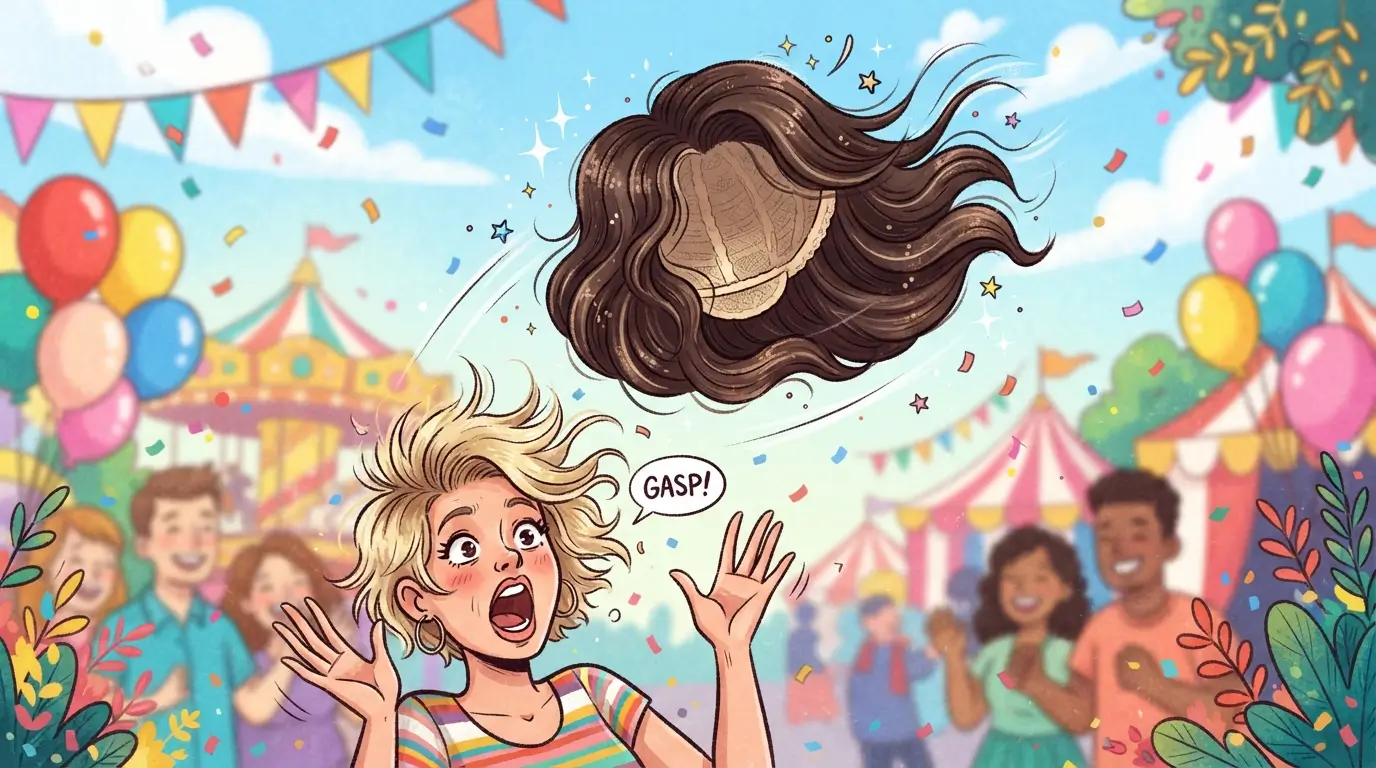
“Wig” is slang for a reaction so strong it’s like your wig flew off your head. People say “wig” when something is shocking, amazing, or impressive — a great performance, a plot twist, or a bold outfit. It comes from Black and queer internet culture and got a huge boost when Katy Perry said it on American Idol in 2018.
Key Takeaways
- “Wig” means something so good, surprising, or intense it figuratively knocks your wig off.
- It grew out of African American Vernacular English (AAVE) and stan Twitter culture.
- Katy Perry saying “wig” on American Idol in 2018 pushed it into the mainstream.
- Older, unrelated idioms like “flip your wig” (to lose your temper) date back to the 1930s–1950s.
- The tone is almost always positive and playful, not rude or insulting.
- It’s still used today, mostly online, though it’s less trendy than it was in 2018.
People search “wig slang” for a few different reasons. Some heard a friend or a TikTok creator shout “wig!” after a jaw-dropping moment and had no idea what it meant. Others remember Katy Perry saying it on American Idol and never got a straight answer about why. And some just stumbled on the word “wig” used in a sentence where it clearly wasn’t about a hairpiece.
This term shows up most often on Twitter/X, TikTok, and in fan communities talking about music, beauty, and pop culture. It’s short, easy to type, and works as a one-word reaction, which is exactly why it caught on.
Is it still around today? Yes, though it’s cooled down from its 2018 peak. You’ll still see it in comment sections, captions, and texts, especially among people who were online during the original American Idol moment or who follow stan culture and drag or ballroom-adjacent spaces where similar wig-based phrases are common.
This guide covers every angle: the meaning, the pronunciation, the history, real examples, similar words, and the honest answer on when “wig” is not the same as older phrases like “flip your wig.” By the end, you won’t need to look this word up anywhere else.
What Does Wig Slang Mean?
Wig slang means being so shocked, impressed, or blown away by something that it’s as if your wig physically flew off your head. It’s a reaction word, not a description of an actual object.
The core idea is simple: something happened that was so intense — a stunning performance, a shocking reveal, a killer outfit — that your (imaginary) wig couldn’t handle it and flew across the room. People say just “wig!” on its own, or build it into a sentence like “that ending had my wig on the floor.”
There’s a second, much older meaning that has nothing to do with this internet slang. “Wig” can simply mean a hairpiece, and older idioms like “flip your wig” or “wig out” mean to lose your temper or get flustered. These two meanings live side by side, and context makes it obvious which one is being used. If someone says “wig!” after a viral video, that’s the modern reaction slang. If someone says “don’t flip your wig,” that’s the older idiom about anger.
Quick Meaning Box
| Meaning | Simple Explanation |
| Modern slang “wig” | An excited reaction meaning something is shockingly good or impressive |
| “Wig out” / “flip your wig” | An older phrase meaning to lose control, get angry, or panic |
| “Bigwig” | Slang for an important or powerful person |
| Literal wig | An artificial covering of hair, or hairpiece |
Pronunciation
“Wig” is pronounced just like it looks: wig (rhymes with “big” and “dig”). There’s no special or exaggerated pronunciation the slang meaning is carried entirely by tone and context, not by how the word sounds.
Where Does Wig Slang Come From?
The reaction-based “wig” slang grew out of African American Vernacular English and spread through stan Twitter, the online fan communities built around musicians and celebrities. The exact moment it was first typed is unclear, but it built on earlier, similar phrases.
The idea of a wig flying off from shock connects to older phrases already common in queer, drag, and ballroom-adjacent slang, where “wig” and related terms like “snatched” describe a look or performance so good it figuratively removes your hairpiece. From there, stan Twitter picked it up as a shorthand for celebrating an artist’s amazing moment a high note, a plot twist, a killer dance break.
The earliest known written definition for this specific meaning on Urban Dictionary was submitted in November 2017. A few months later, in March 2018, Katy Perry used “wig” during a taping of American Idol, and the term jumped from niche internet slang into mainstream news coverage almost overnight. The exact origin before that point is unclear, since slang like this usually spreads through conversation and social media before anyone writes it down.
History of the Term
Before it meant “shocked,” “wig” already had a long history in American English. In the 1930s, the phrase “flip your wig” appeared as slang for losing your temper or going crazy, and by the 1950s, related terms like “wig out” and “wiggy” followed the same pattern. These older phrases used the wig as a stand-in for someone’s composure when you’re that upset, even your wig can’t stay in place.
The modern “shocked” meaning is a newer, separate branch of slang tied to AAVE and stan culture rather than a direct descendant of those older idioms, though they clearly share the same visual joke: something so big it launches your wig off your head.
The term’s biggest jump in popularity came on March 6, 2018, when Katy Perry, then a judge on American Idol, used “wig” during a moment with contestant Noah Davis. The clip went viral, with viewers reacting to a mainstream celebrity using internet slang on live television. Perry later explained the term to Jimmy Kimmel, describing it as slang she’d picked up and connecting it to singing so well that “the wig flies off.” That single television moment is the clearest, most documented spike in the word’s mainstream visibility.
Since 2018, the reaction slang has settled into steady, lower-key use rather than constant viral attention. It shows up in comment sections and captions, especially from people who remember the American Idol clip or who follow stan Twitter and fan culture where similar phrases stayed common.
How People Use It Today
Today, “wig” as a reaction word shows up mostly in text-based social posts rather than spoken conversation. It fits naturally into short-form platforms where a one-word reaction gets the point across fast.
You’ll spot it most in:
- X (Twitter): as a stand-alone reply or quote-tweet caption under a shocking clip or announcement
- TikTok: in comments and captions reacting to a talented performance, dramatic reveal, or unexpected twist
- Instagram: in comments under posts that show a dramatic transformation or bold look
- Discord and group chats: as a quick, casual reaction to something funny or wild that happened in the conversation
It’s rarely used in spoken, face-to-face conversation the way “flip your wig” once was. This is a written, internet-first slang term, and that’s part of why it spread so quickly once Katy Perry’s clip put it in front of a much bigger audience.
Wig Slang Katy Perry
Katy Perry is the single biggest reason this slang term became widely known outside internet fan circles. On March 6, 2018, during the American Idol season 16 premiere, contestant Noah Davis quietly said “wig” while auditioning in front of the judges, and Perry immediately recognized the term, replying “I know. Wig. I feel that already.” Fellow judges Luke Bryan and Lionel Richie had no idea what it meant, and Perry didn’t explain it on air, which only made the clip spread faster online.
Days later, Perry appeared on Jimmy Kimmel Live and explained it directly: she said it’s “a little bit internet language” used “when somebody basically sings really well” so well that, as she put it, the wig flies off because the glue can’t hold through the vibrations. That explanation, paired with the original clip, is why so many people specifically associate this slang with her rather than with its earlier internet roots.
Syrup Wig Slang
“Syrup” is a completely different slang term for wig, and it comes from British Cockney rhyming slang, not internet reaction culture. The full phrase is “syrup of figs,” which rhymes with “wigs.” Over time, English speakers shortened it to just “syrup,” so someone might say “is that a syrup on your head?” to ask if someone is wearing a hairpiece.
This is worth knowing because it can confuse people searching for “wig slang.” “Syrup” refers to the literal object a wig or toupee while the reaction slang “wig!” refers to a feeling. They’re unrelated pieces of slang that both happen to involve the word “wig,” one from London street slang and one from American internet culture.
Wig Gay Slang
Within LGBTQ+ culture, especially drag and ballroom communities, “wig” and related phrases describe a performance, look, or moment so stunning that it figuratively knocks your wig off. This ties closely to the internet reaction slang’s roots, since drag and ballroom culture heavily influenced the language that later spread through stan Twitter and mainstream social media.
Phrases like “wig snatched” or simply “wig!” get used to celebrate an especially fierce outfit, a flawless lip-sync, or an impressive comeback. The exact line between drag-community usage and general internet slang is blurry because the two influenced each other over time, but the LGBTQ+ connection is well documented and widely acknowledged as part of the term’s roots.
Wig Slang UK
In the UK, “wig” carries an extra layer of meaning that doesn’t really exist in American slang: Cockney rhyming slang, where “syrup” (short for “syrup of figs”) is the more common way to casually refer to a wig or toupee. British slang also keeps older, general-English idioms like “wig out,” though these are used less frequently in the UK than in American English.
The newer, American-born reaction slang (“wig!” meaning “I’m shocked”) has spread to UK internet users too, mostly through shared platforms like TikTok and X, but it didn’t originate there and isn’t as tied to British culture specifically.
Flip Your Wig Slang
“Flip your wig” is an older American idiom, first recorded around 1952 according to language researchers, meaning to lose your temper, panic, or go a little crazy. For example: “He flipped his wig when he found out he didn’t get the promotion.”
This phrase is completely separate from the modern “shocked and amazed” slang. It’s easy to confuse the two because they both involve a wig flying off from strong emotion, but “flip your wig” is specifically about anger or losing control, while modern “wig!” slang is almost always about being impressed or delighted.
Split Your Wig Slang
“Split your wig” is a much less common variant of the same idiom family as “flip your wig” and “wig out,” generally meaning to lose your composure or react with strong emotion. It follows the same logic: something happens that’s so intense, your wig can’t stay put.
Compared to “flip your wig,” this phrase shows up far less in written records and everyday speech today. If you hear it, it’s most likely being used the same way as its more common cousin, “flip your wig” describing someone getting worked up or overwhelmed, rather than the newer “impressed” meaning.
What Is a Big Wig Slang
“Bigwig” (sometimes written as “big wig”) means an important, powerful, or influential person, often said with a hint of humor or mild sarcasm. For example: “The bigwigs at the company decided to change the whole policy without asking anyone.”
This term dates back to the 1700s in Britain, when wealthy and powerful people judges, aristocrats, government officials wore large, elaborate wigs as a status symbol. The bigger and fancier the wig, the more important the wearer was assumed to be. Over time, “bigwig” became a stand-in for the person, not the hairpiece itself, and that meaning has stuck around in English for centuries.
Wiggin Slang
“Wiggin” (often used as “wiggin out”) is an older, related slang term meaning to freak out, panic, or act erratically, closely tied to “wig out” from the 1950s. Someone might say, “Don’t wiggin on me, it’s not a big deal,” to tell someone to calm down.
Like “flip your wig” and “wig out,” this phrase belongs to the older family of wig-related idioms about losing composure, not the newer internet slang about being impressed. It’s less common today than “wig out,” and you’re more likely to encounter it in older media or from people who grew up using vintage American slang.
Wiggy Meaning Slang
“Wiggy” has two meanings that are almost opposites of each other, and both connect back to the literal wig. Historically, since wig-wearers were often seen as pompous or overly formal, “wiggy” could describe someone acting stiff, snobby, or overly proper. Later, the word shifted to mean stressed, erratic, or out of control much closer to “wig out.”
Context is everything with this word. If someone’s described as acting “wiggy” in an old-fashioned or formal setting, it likely leans toward the “uptight” meaning. If it’s used about someone reacting to stress or chaos, it lines up with the “freaking out” meaning.
Another Name for Wig Slang
If you want to express the same idea as modern “wig!” slang without using the word itself, a few close alternatives get the same reaction across:
- “Shook” — meaning surprised or shaken up by something
- “Snatched” — meaning a look or moment was flawless and impressive
- “I’m deceased” — meaning something was so funny or wild it “killed” you
- “Sending me” — meaning something is hilarious or over the top
None of these are exact one-to-one swaps, since “wig” specifically leans on the mental image of a wig flying off, but they all work in the same kind of reaction-post context.
Examples in Everyday Conversation
- “Did you see her hit that high note? Wig.”
- “The finale had a twist I did not see coming — my wig is gone.”
- “He walked in wearing that outfit and I said, absolutely wig.”
- “That comeback was so quick, wig!”
- “The way she handled that interview question, wig.”
- “Bro just dropped a diss track out of nowhere, wig.”
- “The choreography in that video? Wig.”
- “She switched up the whole set at the last second, wig.”
- “That plot twist in episode nine? Wig, I had to pause the show.”
- “He nailed that solo first try, no wig required for me to believe it, but still — wig.”
Text Message Examples
- “just watched the game omg wig”
- “she said what?? wig 😭”
- “the ending of that movie… wig”
- “bro really said that to his face, wig”
- “her outfit today, wig fr”
- “that comeback tho, wig”
- “did u see the score, wig”
- “he pulled up in THAT car, wig”
- “the twist at the end, absolute wig”
- “she really said that on live tv, wig”
Social Media Caption Examples
- Instagram: “New look who dis 💅 #wig”
- TikTok: “when the beat drops and you’re not ready #wig #fyp”
- X: “that performance just took my wig clean off”
- Threads: “watching this show live and my wig is somewhere in another zip code”
- Facebook: “That surprise party today had me shook, wig moment for real”
- Instagram: “POV: the glow up is real #wigflewoff”
- TikTok: “she said it with her whole chest, wig #reaction”
- X: “no because that plot twist genuinely got my wig”
- Threads: “the confidence on this one, wig 🙌”
- Instagram: “This look? Wig. This energy? Also wig.”
Is Wig Slang Positive or Negative?
Wig slang is almost always positive and playful, used to celebrate something impressive rather than criticize it. Saying “wig!” after someone’s performance, outfit, or comeback is a compliment, not an insult.
It can feel a little confusing to people outside the culture it comes from, since a shouted “wig!” with no explanation can sound random or even mocking if you don’t know the context. That’s part of what made the Katy Perry moment go viral — the other judges genuinely didn’t understand whether it was a good or bad reaction until she explained it.
There’s rarely a rude or negative use of the term. The older idioms like “flip your wig” and “wig out” lean more negative, describing anger or panic, so if someone tells you “don’t flip your wig,” that’s a mild warning, not a compliment.
Who Uses This Slang?
The reaction slang “wig!” is used mostly by teens and young adults active on TikTok, X, and Instagram, especially within fan communities, drag and ballroom-adjacent spaces, and Black internet culture where it originated. It also got a boost from a much wider, older audience after Katy Perry’s American Idol moment introduced it to people who weren’t already online in those spaces.
Older idioms in the same word family — “flip your wig,” “wig out,” “bigwig” — are used more broadly across age groups since they’ve been part of standard American English for decades and show up in everyday speech, not just internet posts.
Similar Slang Words
| Slang | Meaning |
| Shook | Surprised or emotionally shaken by something |
| Snatched | A look, style, or moment that’s flawless and sharp |
| Sent / Sending me | Something so funny it overwhelms you |
| Deceased | So funny or shocking it “killed” you |
| Iconic | A moment or person seen as legendary or unforgettable |
Opposite Words
- Basic — describing something unoriginal or unimpressive, the opposite of a “wig” moment
- Mid — meaning average or forgettable, with none of the shock value that earns a “wig”
- Boring — a plain, literal opposite with no reaction-worthy energy at all
- Flop — describing something that failed to impress or land as intended
Common Mistakes
A common mistake is assuming “wig” slang always refers to literal hair or hairpieces — most of the time online, it doesn’t. Another mix-up is confusing the modern “impressed” meaning with older idioms like “flip your wig” or “wig out,” which mean the opposite emotional territory (anger or panic instead of excitement).
People also sometimes misspell it as “whig” (a historical political party name) or assume it’s an acronym, when it’s simply the everyday word “wig” used as a reaction. Since the exact first use of the reaction slang is unclear, it’s also a mistake to state a specific invented date or person as its definite origin the honest answer is that its roots trace to AAVE and online fan culture before Katy Perry’s clip made it famous.
When NOT to Use Wig Slang
Avoid using “wig” as slang in professional emails, school assignments, formal presentations, or business communication, since it reads as overly casual and may confuse readers unfamiliar with internet slang. A manager, teacher, or client is far more likely to associate “wig” with a literal hairpiece than with an internet reaction, which can make a message look unclear or unprofessional.
It’s best kept to casual texting, social media captions, and conversations with friends who already understand internet slang. In formal writing, stick to plain words like “impressive,” “surprising,” or “shocking” instead.
Fun Facts
- The first known Urban Dictionary entry for this meaning of “wig” was submitted in November 2017.
- Katy Perry’s “wig” moment on American Idol aired on March 6, 2018, and quickly became a major viral talking point.
- “Flip your wig,” an older and unrelated idiom, was first recorded in 1952 according to language researchers.
- “Bigwig” dates back to the 1700s, tied to powerful people wearing large, elaborate wigs.
- “Syrup,” British slang for a wig, comes from Cockney rhyming slang (“syrup of figs” rhymes with “wigs”).
- “Wiggy” has two nearly opposite meanings: overly formal/snobby, or stressed and out of control.
- The reaction slang “wig!” is tied to African American Vernacular English and stan Twitter culture.
Frequently Asked Questions
What does “wig” mean in slang?
In modern internet slang, “wig” describes a reaction to something shockingly good or impressive so intense that it’s as if your wig flew off your head. It’s usually said as a one-word exclamation, like “wig!” after watching an amazing performance or hearing surprising news. This is different from older phrases like “wig out” or “flip your wig,” which describe anger or panic instead of excitement. Context makes the meaning clear: a shouted “wig!” under a viral clip is almost always a compliment.
Why did Katy Perry say “wig”?
Katy Perry said “wig” during the American Idol season 16 premiere in March 2018 after contestant Noah Davis used the word during his audition. She recognized the term immediately and later explained on Jimmy Kimmel Live that it’s internet slang meaning someone sang so well their “wig flies off.” Her explanation and the viral clip introduced the slang to a much wider audience beyond the internet fan spaces where it started.
What does wig mean on TikTok?
On TikTok, “wig” is used the same way it is elsewhere online: as a short, punchy reaction to something impressive, shocking, or well done. You’ll see it in comments under talented performances, dramatic reveals, or standout looks, and in captions like “#wig” or “#wigflewoff.” It functions almost like an exclamation point — quick, casual, and meant to hype up the content rather than explain anything in detail.
What is wig slang in Urban Dictionary?
Urban Dictionary hosts the earliest documented written definition of this slang meaning, submitted in November 2017, describing “wig” as a reaction to something so impressive it figuratively knocks a wig off. Urban Dictionary entries are user-submitted and not officially verified, so definitions can vary in wording, but this general “shocked and amazed” meaning is consistent across most entries for the term.
Final Thoughts
“Wig” is a small word carrying a big reaction. Whether someone’s replying to a viral clip, a killer outfit, or a plot twist that came out of nowhere, saying “wig!” packs a whole burst of surprise and admiration into one syllable. It grew out of AAVE and internet fan culture, got a massive spotlight from Katy Perry’s 2018 American Idol moment, and settled into everyday use across social media.
Just remember: this modern slang lives apart from older phrases like “flip your wig,” “wig out,” and “bigwig,” which carry very different meanings tied to anger, panic, or importance. Once you know the difference, you’ll never mix them up and you’ll know exactly what someone means the next time your feed says “wig.”

Ethan Brooks writes clear and engaging content about language, slang, and modern communication. He helps readers understand everyday expressions through expert articles on slangwordz.com.