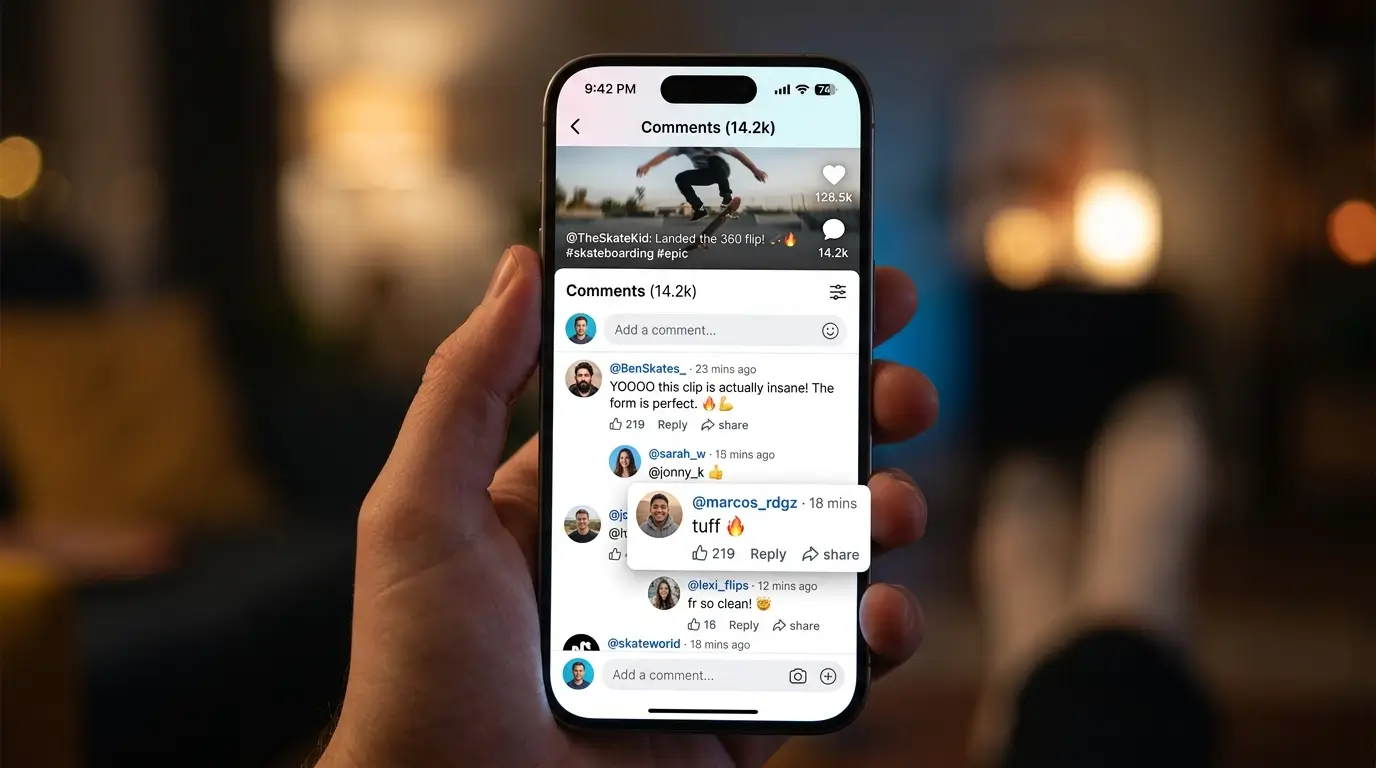
“Tuff” is slang for something cool, impressive, or awesome. It’s a playful respelling of “tough,” but it doesn’t mean rough or hard. Instead, it means something looks great, feels satisfying, or deserves respect.
You’ll see it in comments, captions, and casual chats online.You’re scrolling through comments and someone writes “this is tuff.” No context about anything being hard or rough. Just… tuff.
That’s because tuff meaning slang has almost nothing to do with the word “tough” the way your teacher used it. It’s its own thing now.
People search for this term because spelling is throwing them off. It looks like a typo. It sounds like it should mean something rugged or difficult. But online, it usually just means something is good.
You’ll spot it most on TikTok, Instagram, and in group chats. It shows up under photos, videos, gaming clips, and even casual texts between friends.
Is it still used today? Yes. It’s a small but steady part of casual online language, especially among younger internet users, though it isn’t limited to any one age group.
This guide breaks down exactly what it means, where it likely came from, and how to use it without sounding out of place.
What Does Tuff Meaning Slang Mean?

At its core, “tuff” is a compliment. It means something is cool, well done, or worth admiring.
Depending on context, it can mean:
- Impressive “That dunk was tuff.”
- Good looking “Your fit is tuff today.”
- Satisfying “That clean edit was tuff.”
- Skillful “Bro is tuff at this game.”
Context shifts the exact flavor of the compliment. About a person’s skill, it praises talent. Used about an outfit, it praises style. A video or photo, it praises quality.
It rarely means “difficult” or “rugged” the way “tough” traditionally does, even though the words sound identical when spoken.
Quick Meaning Box
| Meaning | Simple Explanation |
| Cool / impressive | Something looks great or stands out |
| Skilled | Someone is good at something |
| Stylish | An outfit or look is on point |
| Satisfying | A clip, edit, or moment feels rewarding to watch |
Pronunciation
“Tuff” is pronounced exactly like the word “tough”: /tʌf/ (rhymes with “stuff” and “rough”).
The spelling change is intentional. Writing it as “tuff” signals the slang meaning rather than the standard dictionary definition of “tough.”
Where Does Tuff Come From?
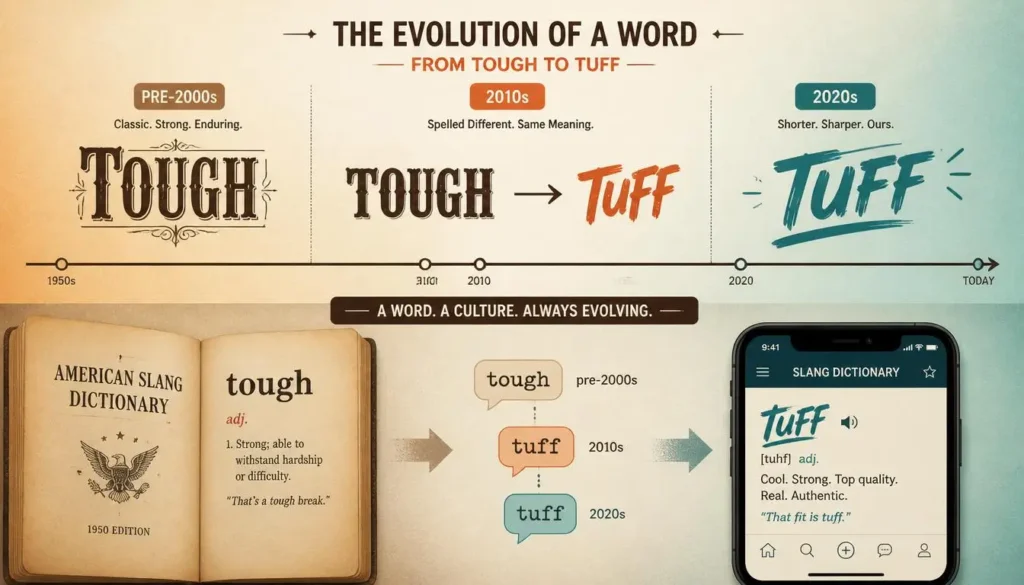
The exact origin is unclear.
“Tuff” as a respelling of “tough” isn’t brand new. Casual, phonetic spellings like this have shown up in American slang for decades, often used to give an existing word a fresh, informal feel.
“Tough” itself has long carried a secondary meaning of “great” or “cool” in American English, separate from its literal meaning of “hard to break.”
What’s clearer is how the internet era changed things. Short form video platforms and comment culture gave “tuff” new visibility. Typing it phonetically fits the fast, casual tone of captions and comments, and it stands out visually from the standard word “tough.”
There’s no single documented moment where “tuff” was invented as slang. It’s more accurate to describe it as an evolving, informal spelling that gained traction alongside internet slang culture generally.
History of the Term

“Tough” has carried a slang meaning of “excellent” or “impressive” in American English for a long time, well before the internet existed. This usage predates social media by decades.
What changed more recently is the spelling. As online communication leaned into shorthand, altered spellings, and stylized text, “tuff” became a common way to write the slang sense of the word without confusing it with the literal meaning of “hard” or “rugged.”
This kind of respelling isn’t unique to “tuff.” Internet slang often reshapes existing words rather than inventing new ones from scratch. The meaning of “tough as impressive” already existed. The internet mostly changed how people typed it.
It hasn’t disappeared or faded out. If anything, its use in short captions and quick comments has kept it steady in casual online writing.
How People Use It Today
TikTok:
Common in comments under skill clips, transformations, or stylish outfits. Often just one word: “tuff.”
Instagram:
Used in captions and comments to react to a photo or reel.
Reddit:
Appears in comment threads reacting to a clip, build, or accomplishment someone shared.
Discord:
Used casually in server chats, especially gaming servers, to react to a play or clip.
X (Twitter):
Shows up in quote tweets and replies reacting to something impressive.
Snapchat:
Used in captions or chat replies reacting to a photo or Snap.
Gaming:
Frequently used to praise a good play, a clutch moment, or a well designed setup.
Text messages:
Used between friends the same way you’d use “nice” or “sick,” but with more personality.
Examples in Everyday Conversation
1: Dude, check out my new bike.
2: That’s tuff, where’d you get it?
1: I finally beat that boss fight solo.
2: Tuff. That level’s brutal.
1: I redesigned my whole room this weekend.
2: Wait that’s actually tuff.
1: She just landed that backflip first try.
2: Bro that was tuff.
1: I made this playlist for the road trip.
2: This is tuff, adding it to mine.
1: Look at this thrift find.
2: That jacket is tuff ngl.
1: I finished the whole project a day early.
2: Tuff work honestly
1: Check out my new setup.
2: This is tuff, what monitor is that?
1: I taught myself that guitar riff.
2: That’s tuff, you sound good.
1: We won states this year.
2: That’s tuff, congrats.
Text Message Examples
“bro your fit today was tuff”
“ngl that edit was tuff”
“tuff win last night”
“your setup looks tuff in the pic”
“that was a tuff play ngl”
“the new track is tuff”
“tuff haircut, looks clean”
“that comeback was tuff”
“tuff effort out there today”
“ok that’s actually tuff, well done”
Social Media Caption Examples
Instagram:
“New fit, feeling tuff today 🔥”
TikTok:
“This transformation is tuff, wait for it”
Twitter/X:
“That last minute goal was tuff, what a finish”
Threads:
“Tuff little upgrade to the setup this week”
Facebook:
“Kids put together a tuff little garden project this summer”
Is It Positive or Negative?
“Tuff” is almost always positive. It’s a compliment, similar to “cool,” “nice,” or “impressive.”
It can sound sarcastic if paired with a flat or dismissive tone, but on its own, it’s a genuine sign of approval.
Misunderstandings usually come from the spelling, not the meaning. Someone unfamiliar with the slang might assume it’s a typo for “tough” in the traditional sense, which can make a compliment read as confusing rather than kind. Context almost always clears this up quickly.
Who Uses This Slang?
Teenagers:
Common in comments, texts, and captions among younger users.
Adults:
Also used casually, especially by people active in gaming or online communities.
Gamers:
Frequently used to react to skillful plays or setups.
Internet users generally:
Anyone comfortable with casual online shorthand may use it.
Regional use:
No strong regional pattern has been documented; it appears broadly across English speaking online spaces.
Pop culture:
It shows up organically in comment sections rather than being tied to a specific show, artist, or influencer.
Similar Slang Words
| Slang | Meaning |
| Fire | Something excellent or exciting |
| Sick | Impressive or cool |
| Clean | Well done or polished |
| Goated | The best at something |
| Slaps | Something (usually music) that’s really good |
Opposite Words
Mid
Average or unimpressive.
Trash
Poor quality or badly done.
Wack
Disappointing or not good.
Basic
Unoriginal or plain.
Common Mistakes
A common mistake is assuming “tuff” always means “difficult,” since that’s the traditional meaning of “tough.” In slang use, it almost always means the opposite something good, not something hard.
Another mistake is spelling it “tough” in casual captions, which can read as more formal or less intentional than the stylized “tuff.”
Some people also overuse it in serious or formal contexts, where it can come across as out of place.
When NOT to Use It
Professional emails:
Slang like “tuff” can seem unprofessional in written business communication.
School assignments:
Formal writing calls for standard vocabulary, not casual internet slang.
Business meetings:
Clients and colleagues expect clear, standard language in professional settings.
Formal writing:
Reports, essays, and official documents should avoid slang entirely to maintain a professional tone.
Using “tuff” in these settings can distract from your message or make writing seem less polished.
Fun Facts
- “Tuff” is pronounced identically to “tough,” despite the different spelling.
- The slang meaning of “tough” as “impressive” predates the internet by decades.
- Respelling words phonetically is a common pattern in internet slang, not unique to “tuff.”
- It’s often used as a single word reaction rather than in a full sentence.
- It pairs naturally with visual content like photos, clips, and edits.
Frequently Asked Questions
1:Is “tuff” offensive?
No. “Tuff” is a positive slang term used as a compliment. It isn’t considered offensive or disrespectful in typical casual use.
Like most slang, tone and context can shift how it lands, but the word itself carries no negative or insulting meaning.
2:Who created the word “tuff”?
There’s no single documented creator. The exact origin is unclear. It likely developed as a casual, phonetic respelling of “tough,” which already had a long standing slang meaning of “impressive” or “cool” in American English before the internet popularized the alternate spelling.
3:Is “tuff” still popular?
Yes, it’s still used regularly in comments, captions, and casual chats online. It hasn’t become outdated, though like most slang, its popularity can rise and fall depending on the platform and community.
4:Can adults use “tuff”?
Yes. While it’s common among younger users, adults use it too, especially in gaming communities and casual online spaces. There’s no strict age rule for using it, as long as the setting is informal.
5:Is “tuff” Gen Z slang?
It’s popular among Gen Z, but it isn’t exclusive to that generation. Its roots in the slang meaning of “tough” go back further, and people across different age groups use it casually online today.
6:Is “tuff” old slang or new slang?
It’s a bit of both. The idea behind it using “tough” to mean “impressive” is older. The specific spelling “tuff” gained more visibility through internet and social media use.
7:How do you pronounce “tuff”?
It’s pronounced the same as “tough,” rhyming with “stuff” and “rough.” The spelling is different, but the sound stays identical.
8:What are similar words to “tuff”?
Words like “fire,” “sick,” “clean,” and “goated” carry a similar meaning. Each has its own flavor, but all generally express approval or admiration for something impressive.
9:Can I use “tuff” at work?
It’s best avoided in professional emails, meetings, or formal writing. Slang like this fits casual conversations, not business communication, where clearer, more standard language is expected.
10:Why is “tuff” trending?
Short form video platforms and quick comment culture favor short, punchy reactions. A single word like “tuff” fits that style perfectly, which helps keep it visible and in regular use.
Final Thoughts
“Tuff” is one of those slang words that looks confusing before you know it, then makes total sense once you do. Simply a stylish way of saying something is impressive, if that’s a skill, an outfit, or a great video.
not rude. It’s not complicated. Just a quick, casual compliment that fits the fast pace of how people talk online now.
Keep it in your back pocket for texts, comments, and captions. Just save the formal vocabulary for emails and school papers.
Slang like this changes over time, so don’t be surprised if new variations pop up down the road.

Olivia Carter specializes in explaining word meanings, internet slang, and cultural phrases in a simple way. Her goal is to make learning easy for every visitor at slangwordz.com