Millennial slang means the words and phrases people born between 1981 and 1996 grew up using, shaped by early internet culture, texting, and 90s and 2000s TV. It includes terms like “adulting,” “on fleek,” “salty,” and “extra,” and much of it is now seen as dated or “cringe” by younger generations.
Key Takeaways
- Millennial slang refers to words and phrases popularized by people born roughly 1981 1996.
- Much of it grew out of early internet forums, instant messaging, and 2000s pop culture.
- Terms like “adulting,” “salty,” and “on fleek” are classic examples.
- Some millennial slang is still used daily, while other terms now feel outdated or ironic.
- The tone is usually casual and playful, not rude or offensive.
- Gen Z often uses millennial slang jokingly to poke fun at “millennial cringe.”
People search for “millennial slang” for a few different reasons. Some want a nostalgic trip back to the days of AIM away messages and flip phones.
Others are trying to understand a word their older sibling or coworker just used. And plenty of people are just curious how millennial slang stacks up against Gen Z slang today.
You’ll run into millennial slang everywhere online. It shows up in memes, TikTok videos poking fun at “millennial habits,” and casual conversation between coworkers and friends. It’s also common in workplace chat, especially among people now in their 30s and 40s.
Is it still used today? Yes and no. Some millennial slang, like “adulting” or “ghosting,” has stuck around and is used across generations.
Other words, like “on fleek,” mostly live on as a joke or a throwback reference now. This guide breaks down what millennial slang actually means, where it came from, and how people use it in real life today.
What Does Millennial Slang Mean?

Millennial slang is the informal vocabulary that became popular with the millennial generation, roughly people born between 1981 and 1996. It’s not one single word but a whole category of expressions.
This slang often blends internet culture with everyday speech. Words like “totes” (short for totally), “adulting” (acting like a responsible grownup), and “basic” (unoriginal or predictable) all fall under this umbrella. Some terms describe feelings, some describe people, and some are just fun shortcuts for longer phrases.
Millennial slang isn’t tied to one single meaning. It’s more of a shared vocabulary that reflects a generation’s humor, values, and the technology they grew up with.
Quick Meaning Box
| Meaning | Simple Explanation |
| A generational label | Slang commonly used by people born 1981–1996 |
| A style of humor | Often ironic, self deprecating, or nostalgic |
| A vocabulary set | Words like “adulting,” “salty,” “on fleek,” “basic” |
| A cultural marker | Signals when someone grew up and what shaped their speech |
Pronunciation
“Millennial slang” is pronounced mih LEN ee uhl slang. There’s no tricky pronunciation here since it’s a straightforward English phrase, not a coined word itself.
Where Does Millennial Slang Come From?
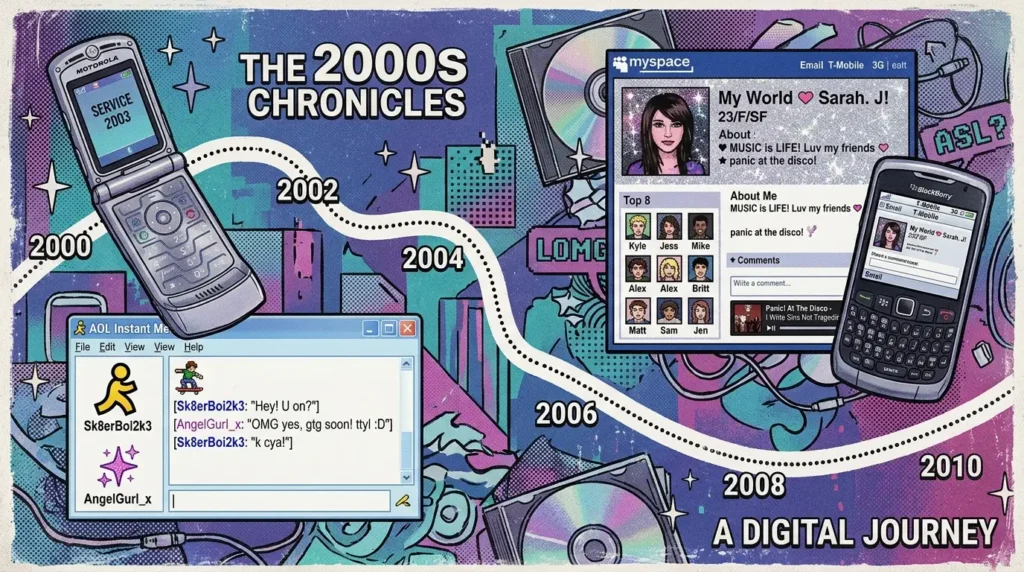
Millennial slang mostly comes from early internet culture, texting, and 2000s TV and music. It grew alongside instant messaging, MySpace, and the first wave of smartphones.
Many terms trace back to online forums, chat rooms, and early social media platforms from the late 1990s through the 2000s.
Texting abbreviations like “lol,” “brb,” and “omg” became part of everyday speech during this time. Reality TV, sitcoms, and pop music of the era also shaped how millennials talked, adding phrases that felt fresh and casual compared to more formal generations before them.
The exact origin of many individual terms is unclear, since slang usually spreads informally through friend groups, schools, and online spaces before anyone traces where it started.
What’s clear is that millennial slang developed during a unique window: the shift from offline to online life.
History of the Term
Millennial slang didn’t appear overnight. It evolved in stages as technology changed.
In the late 1990s and early 2000s, instant messaging platforms shaped a lot of early millennial slang. Abbreviations and shorthand were necessary because typing was slow and screen space was limited. Phrases like “brb” and “ttyl” became second nature.
By the mid-2000s, social media sites added new layers. MySpace and early Facebook introduced status updates, which pushed people to write short, punchy phrases. Words like “epic fail” and “random” became popular during this stretch.
Around the 2010s, smartphones and Twitter added more slang, like “on fleek” and “bae.” This is often considered the peak era of what people now call “millennial slang.”
More recently, millennial slang has seen a bit of a resurgence, but mostly as nostalgia or humor. Younger users sometimes use it ironically, turning old millennial phrases into jokes about “millennial cringe.”
How People Use It Today
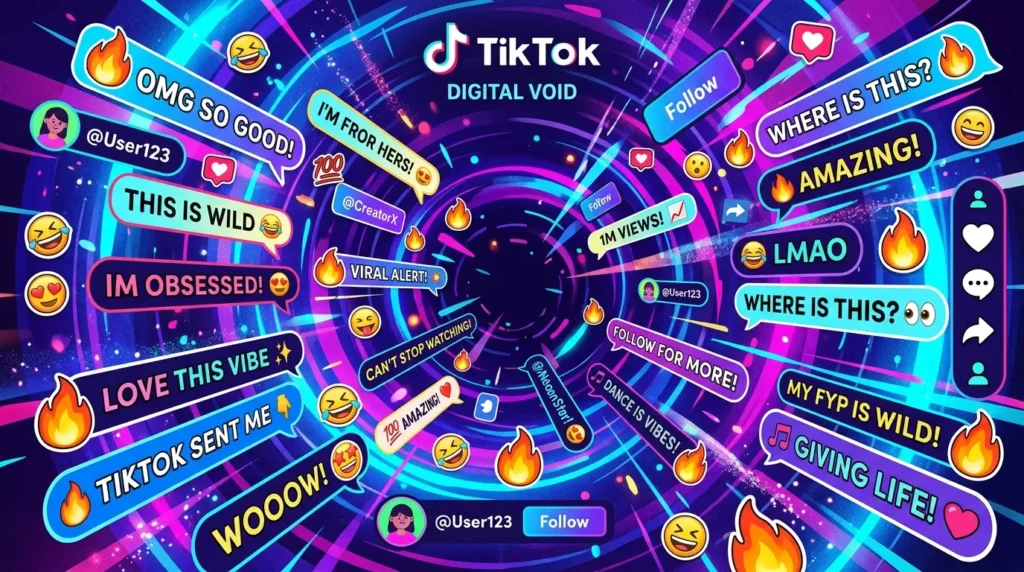
Millennial slang today shows up mostly in casual texting, workplace chat, and social media captions. It’s less common in trend-driven spaces like TikTok, which lean more toward current Gen Z slang.
On platforms like Instagram and Facebook, millennials still use their generation’s slang naturally, often without thinking about it. On X (formerly Twitter), it shows up in jokes and generational comparisons.
On TikTok, millennial slang is more likely to appear as the punchline of a video, with captions like “millennials really said this” attached to old school phrases. In texting and everyday conversation, plenty of millennial slang has simply become normal English at this point.
Millennial Slang Words
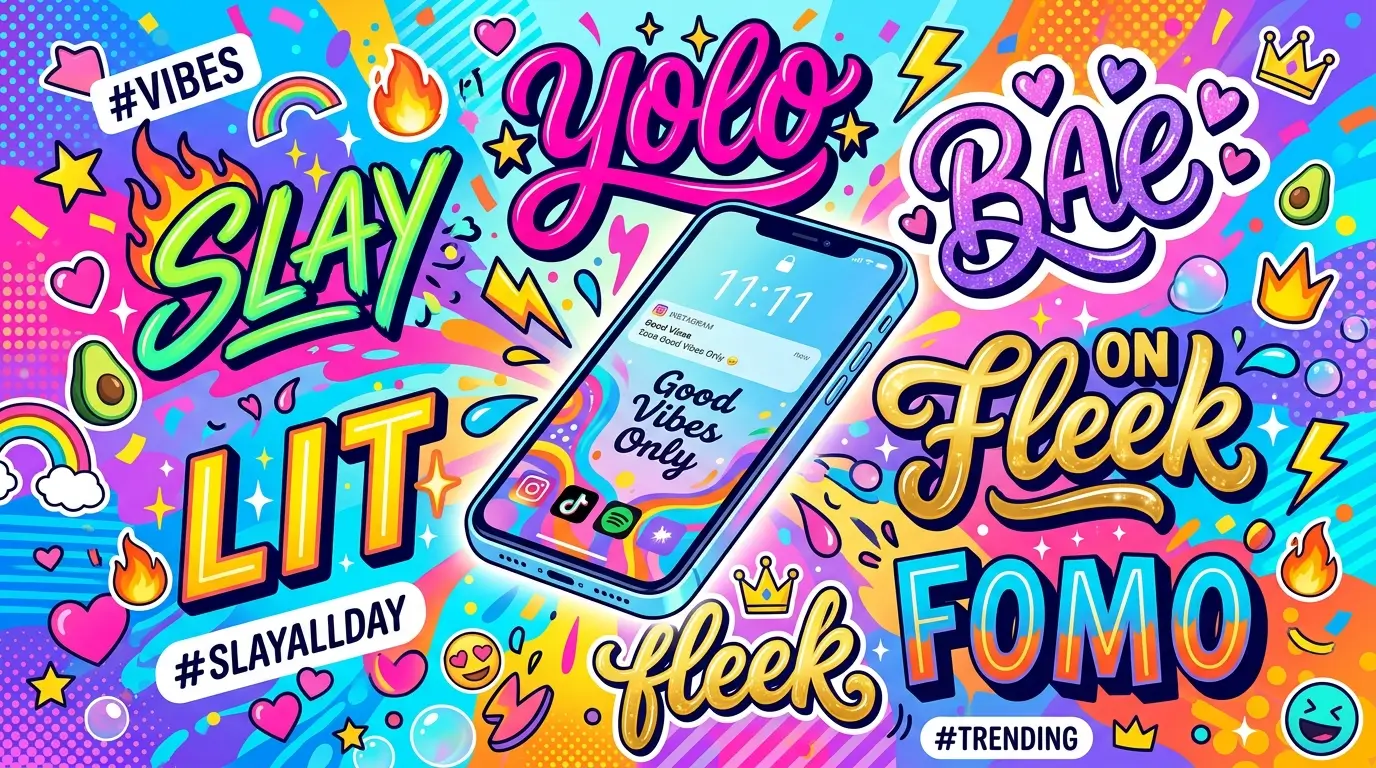
Some of the most recognizable millennial slang words include “adulting,” “salty,” “basic,” “extra,” “ghosting,” “totes,” “on fleek,” and “epic fail.” Each one captures a specific feeling or situation.
For example, “adulting” describes doing responsible tasks like paying bills or making appointments.
“Salty” means being bitter or annoyed about something small. “Basic” describes someone or something seen as unoriginal, often tied to mainstream trends. These words are short, expressive, and easy to drop into casual conversation.
Millennial Slang vs Gen Z Slang
Millennial slang and Gen Z slang share some overlap but differ in tone and delivery. Millennial slang tends to be a bit more literal, while Gen Z slang often relies on irony and rapid turnover.
Millennials popularized phrases like “on fleek” and “adulting,” which describe things fairly directly.
Gen Z slang, like “rizz” or “no cap,” often requires more cultural context to understand. Gen Z slang also changes faster, partly because trends spread instantly through short-form video. Millennial slang, by comparison, had more time to settle in before spreading widely.
Millennial Slang 90s
In the 1990s, millennial slang was still forming, heavily influenced by older Gen X phrases and early pop culture. Words like “dope,” “chill,” and “as if” were common, often borrowed from movies, TV, and music of the decade.
This era set the stage for millennial slang rather than defining it fully, since many millennials were still children or teens during the 90s.
Millennial Slang 2000s
The 2000s are considered the true birth of millennial slang as its own identity. Instant messaging shorthand, reality TV catchphrases, and early social media all combined during this decade.
Phrases like “my bad,” “sweet,” and “totally” became everyday vocabulary. Text abbreviations exploded in popularity as flip phones and early smartphones became common among teens and young adults.
Millennial Slang for Money
Millennial slang for money includes casual terms like “cash,” “bread,” “cheddar,” and “stacks.” These words are used to talk about money in a relaxed, informal way.
“Bread” and “cheddar” are especially common in casual conversation about needing or having money. “Stacks” often refers to larger amounts, usually said in a joking or exaggerated way rather than literally.
Millennial Slang for Cool
When millennials want to describe something as cool, common words include “dope,” “sick,” “fire,” and “epic.” These terms show approval or excitement about something.
“Dope” and “sick” were especially popular in the 2000s and early 2010s. “Fire” became more common later, showing some overlap with terms that Gen Z also uses today.
Millennial Slang Phrases
Beyond single words, millennials also use full phrases like “I can’t even,” “that’s a mood,” “adulting is hard,” and “big mood.” These phrases express relatable feelings in a casual, often humorous way.
These phrases work well in captions, texts, and everyday chat because they capture a whole emotion in just a few words.
Millennial Slang List
Here’s a quick-reference list of common millennial slang terms and what they mean:
- Adulting doing responsible adult tasks
- Salty bitter or annoyed
- Basic unoriginal or predictable
- Extra over the top or dramatic
- Ghosting suddenly cutting off contact
- On fleek perfectly done, especially eyebrows
- Totes short for “totally”
- Epic fail a big, often embarrassing mistake
- Bae a term for a romantic partner
- FOMO fear of missing out
Gen Alpha Slang for Millennials
Gen Alpha, the generation after Gen Z, has started developing its own slang to describe millennials, often playfully.
Some Gen Alpha kids use terms borrowed from older siblings or parents to gently tease millennial habits, like over-explaining things or being “extra” about minor tasks.
This kind of cross-generational slang is still developing, and specific widely recognized terms are limited so far.
Examples in Everyday Conversation
- “I have to go do adulting stuff today, like renew my license.”
- “She’s acting so salty about losing the game.”
- “That restaurant was way too basic for a birthday dinner.”
- “He’s being extra again, it’s just a Tuesday.”
- “I think he’s ghosting me, no replies in three days.”
- “Her makeup was on fleek for the wedding.”
- “I’m totes going to be late again.”
- “That presentation was an epic fail.”
- “My FOMO is kicking in seeing everyone at that concert.”
- “Bae said we’re getting dinner tonight.”
Text Message Examples
- “omg adulting is so hard today lol”
- “ur being so extra rn 😂”
- “he’s def ghosting me, no reply since sat”
- “totes coming to the party tn”
- “big mood, same here”
- “that party was basic ngl”
- “brb, dealing with epic fail moment”
- “FOMO hitting hard seeing these pics”
- “bae said he’s on his way”
- “so salty rn about this traffic”
Social Media Caption Examples
- Instagram: “Adulting like a pro today 💼”
- TikTok: “POV: millennials explaining what ‘on fleek’ meant 😂”
- X: “Salty about this if, not gonna lie.”
- Threads: “Basic pumpkin spice season is back and I’m here for it.”
- Facebook: “Feeling extra today, no regrets.”
- Instagram: “FOMO is real when your friends travel without you.”
- TikTok: “When bae remembers your coffee order ☕”
- X: “Epic fail of the week: forgot my own birthday plans.”
- Threads: “Totes ready for the weekend.”
- Facebook: “Throwback to when ‘on fleek’ was peak slang.”
Is It Positive or Negative?
Millennial slang is mostly positive or neutral in tone. It’s meant to be playful, relatable, and casual rather than harsh or offensive.
Some terms, like “salty” or “basic,” can sound a little critical depending on context.
Calling someone “basic” might come across as slightly judgmental if used to mock someone’s taste. Still, in most everyday use, millennial slang is friendly and light-hearted, especially among people who grew up using it.
Who Uses This Slang?
Millennial slang is used primarily by people currently in their late 20s through early 40s, though usage varies.
Some terms have spread to older Gen Z users and even parents of millennials through overlap in workplaces and family conversations.
Teens today are less likely to use classic millennial slang seriously, though they may reference it jokingly. Gamers and online communities from the 2000s and 2010s also helped spread specific terms, especially ones tied to instant messaging and early online forums.
Similar Slang Words
| Slang | Meaning |
| Lit | Exciting or amazing |
| Fam | Close friends, like family |
| Sus | Suspicious |
| Vibe | A feeling or mood |
| Cap | A lie or exaggeration |
Opposite Words
- Basic is the opposite of unique or original, since it implies something predictable.
- Extra is the opposite of chill or low key, since it describes over the-top behavior.
- Salty is the opposite of content or easygoing, since it implies bitterness.
- Epic fail is the opposite of win or success.
Common Mistakes
People sometimes confuse “salty” with actual anger, when it usually means mild annoyance instead. Another common mistake is using “on fleek” seriously today, since it now mostly appears as a joke or throwback reference rather than current slang.
Some people also misspell “totes” as “toats,” or use “adulting” to describe any adult behavior instead of specifically boring or responsible tasks like paying bills.
When NOT to Use It
Millennial slang should be avoided in professional emails, school assignments, and formal writing. Words like “salty,” “extra,” or “totes” can come across as unprofessional in these settings.
In job interviews or client-facing communication, using slang like “adulting” or “ghosting” might make a message seem too casual. Formal writing, resumes, and academic papers all call for standard English instead.
Fun Facts
- Millennial slang often overlaps with early internet chat abbreviations like “lol” and “brb.”
- “Adulting” became widely used enough to appear in major dictionaries.
- Many millennial slang terms started as jokes before becoming everyday vocabulary.
- Reality TV and early 2000s pop culture heavily shaped this slang.
- Some millennial slang, like “epic fail,” crossed over into gaming culture.
- TikTok has helped bring some old millennial slang back, usually as a joke.
Frequently Asked Questions
1:What are some 2000s slang words?
Common 2000s slang words include “my bad,” “sweet,” “totally,” “as if,” and “sick” (meaning cool). Texting also introduced abbreviations like “lol,” “brb,” and “ttyl” during this decade. Reality TV and early social media helped spread these terms quickly among teens and young adults.
Many of these words are still recognized today, even if they’re used less often. The 2000s were a key decade for shaping what people now recognize as classic millennial slang.
2:What is cringe millennial slang?
Cringe millennial slang refers to phrases that now feel outdated or overused, especially to younger generations. Terms like “on fleek,” “totes,” or “epic fail” often get labeled this way.
It’s not that the words were ever wrong, they just became associated with a specific era and lost their freshness.
Younger users sometimes use these phrases ironically to poke fun at millennial habits. This kind of cringe label is common with slang in general, since all generations eventually see their old phrases become dated.
3:What do millennials say instead of cool?
Millennials often say “dope,” “sick,” “sweet,” or “epic” instead of cool. These words carry the same meaning but reflect the casual tone popular during the 2000s and early 2010s.
“Dope” and “sick” were especially common among teens and young adults during that period. Some of these terms overlap with slang used by other generations too, showing how casual vocabulary often gets shared and reused across age groups over time.
4:Which generation is the most educated?
Education level comparisons between generations are complex and depend on the specific measure used, like college degree attainment or literacy rates. This topic isn’t directly tied to millennial slang, but it’s a common related search.
For accurate, up-to-date generational education statistics, checking sources like the U.S. Census Bureau or Pew Research Center is the most reliable approach, since this kind of data changes as more people complete their education over time.
Final Thoughts
Millennial slang tells the story of a generation that grew up between two worlds: one without the internet and one shaped entirely by it.
From early instant messaging to smartphones and social media, millennials built a vocabulary that reflected fast-changing technology and pop culture.
Some of these words, like “adulting” and “ghosting,” have become part of everyday English. Others, like “on fleek,” now live on mostly as nostalgic jokes.
Either way, millennial slang remains a fun window into how language shifts alongside culture and technology.
If you grew up using these words or you’re just learning them now, they capture a specific moment in internet history worth understanding

Olivia Carter specializes in explaining word meanings, internet slang, and cultural phrases in a simple way. Her goal is to make learning easy for every visitor at slangwordz.com