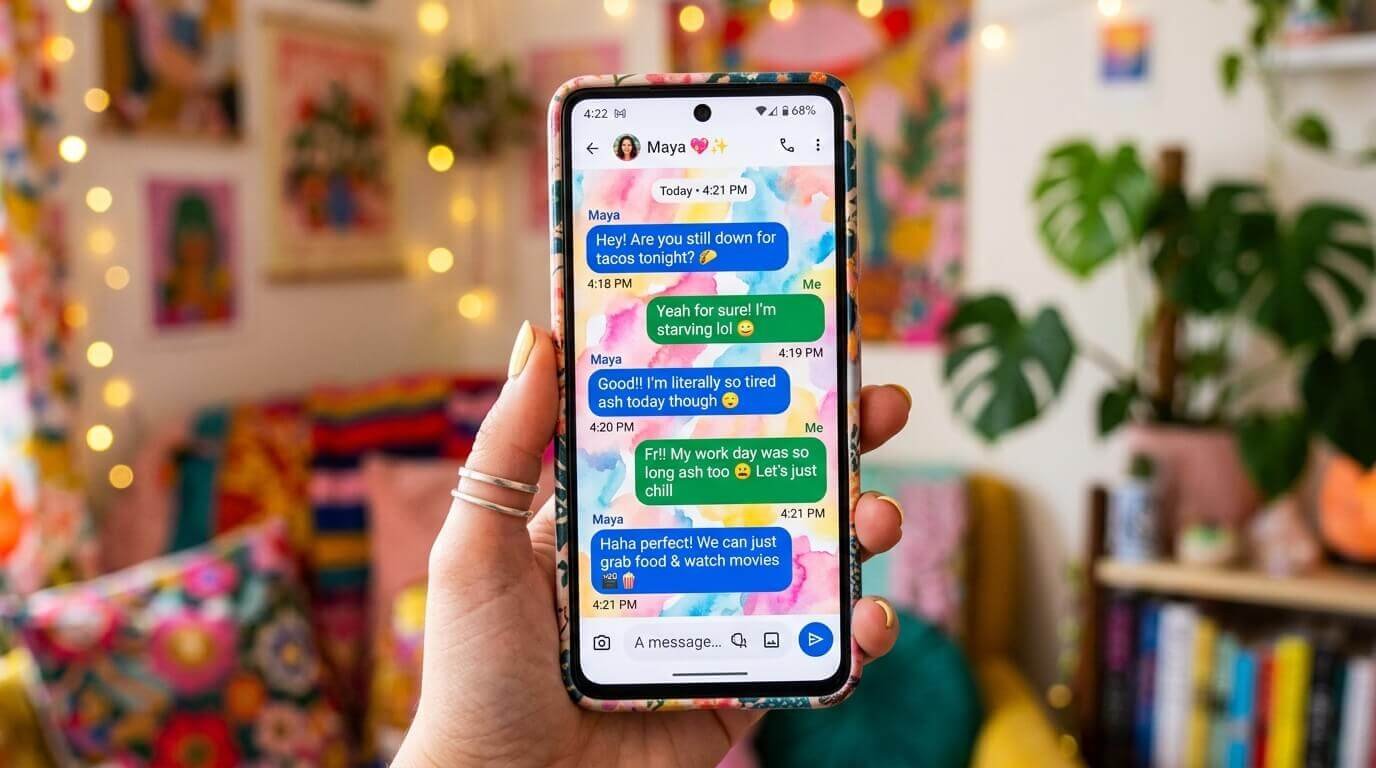
“Ash” is internet slang short for “as hell.” People add it after an adjective to make a feeling stronger, like “tired ash” (very tired) or “cold ash” (very cold). It’s casual, common among Gen Z, and used mostly in texting and on social media like TikTok and Instagram.
Key Takeaways
- “Ash” means “as hell” and works as an intensifier, similar to “very” or “super.”
- It usually comes right after an adjective, such as “hot ash” or “funny ash.”
- The exact origin is unclear, but it likely grew from how “as hell” sounds when spoken quickly.
- It became popular on TikTok, Instagram, and X starting around the early 2020s.
- The tone is mostly neutral to positive and playful, though it can sound rude in the wrong context.
- It’s still actively used today, especially by teens and young adults.
You’ve probably seen it in a comment section or a group chat. Someone writes “this is funny ash” or “I’m hungry ash” and it looks like a typo at first glance. It isn’t. It’s slang, and it’s everywhere online right now.
People search for ash meaning slang because the word shows up in odd places. It sits at the end of a sentence, right after a describing word, and it doesn’t match any meaning most people learned in school.
That confusion is normal. The word looks like it could mean burnt wood, a nickname, or even a typing mistake.
This slang is still very much alive today. You’ll spot it in TikTok captions, Instagram comments, Snapchat messages, and casual texts between friends. It’s especially common among teens and younger adults, though plenty of older internet users have picked it up too.
This guide covers everything about ash meaning slang:
what it means, where it likely came from, how people use it on different platforms, and how to avoid mixing it up with other meanings of the word “ash.” By the end, you’ll know exactly how to read it and use it yourself.
What Does Ash Meaning Slang Mean?
In slang, “ash” is a short way of saying “as hell.” It works as an intensifier, meaning it makes whatever word comes before it feel bigger or stronger.
So instead of typing “I am extremely tired,” someone might just type “I’m tired ash.” Both sentences mean the same thing. The slang version just feels faster and more casual, which fits how people talk online.
This word almost always follows an adjective. That’s the pattern to watch for. You’ll see it in phrases like:
- “That show was boring ash.”
- “She’s smart ash.”
- “This coffee is hot ash.”
Outside of slang, “ash” still has its regular English meaning too. It can refer to the gray powder left after something burns, or it can be a nickname for names like Ashley, Ashton, or Ashlynn. Context tells you which meaning applies. A sentence like “there’s ash on the carpet” is talking about burnt residue, not slang.
Quick Meaning Box
| Meaning | Simple Explanation |
| Slang intensifier | Short for “as hell,” used to strengthen an adjective (e.g., “cold ash”) |
| Literal ash | The powder left after something burns, like wood or a cigarette |
| Nickname | Short form of names like Ashley, Ashton, or Ashlynn |
| Ashy (skin) | Describes dry, flaky, or dull looking skin |
Pronunciation
Ash is pronounced simply as “ash,” rhyming with “cash” or “dash.” When people say the slang version out loud, it sounds like a quick, clipped version of “as hell,” almost like the “hell” got trimmed down to just the ending sound.
Where Does Ash Meaning Slang Come From?

The exact origin is unclear, but the most common explanation is that it comes from the phrase “as hell” said quickly in casual speech. Over time, that fast pronunciation got typed out as “ash” instead of the full phrase.
This kind of shortening happens a lot in spoken English before it ever shows up in writing. People already said things like “tired as hell” or “cold as hell” long before texting existed.
As messaging apps and social media made short, punchy phrases more useful, “as hell” likely got clipped down for speed and style, eventually landing on the spelling “ash.”
Some slang patterns like this have roots in African American Vernacular English (AAVE) and youth internet culture, where rhythm and quick delivery shape how words get shortened and spread. That connection is worth noting, though it’s hard to pin an exact starting point or single source for this particular word.
History of the Term
Urban Dictionary entries defining “ash” as “as hell” date back to at least the mid 2010s, though the term wasn’t widely known outside small pockets of internet slang at that point.
The bigger jump happened around 2020 to 2022, when short form video apps like TikTok exploded in popularity.
Fast, casual captions became the norm, and intensifiers like “ash,” “fr” (for real), and “lowkey” spread quickly through comment sections and video captions. By 2022, “ash” had become a recognizable piece of Gen Z vocabulary.
Since then, it hasn’t really faded. It shows up regularly in 2026 across texting and social platforms, which suggests it has settled in as a lasting part of casual internet language rather than a passing trend. Millennials and older users recognize it now too, even if they don’t use it as naturally as younger generations do.
How People Use It Today
People use “ash” mainly in casual, digital spaces rather than formal writing. It shows up most in texting, social media comments, and short captions.
On TikTok, it fits right into the fast comment style, showing up in things like “relatable ash” or “this is funny ash.” On Instagram, it often appears under photos as a quick compliment, such as “pretty ash” or “fine ash.
” Snapchat conversations tend to use it for genuine emphasis between friends, like “I’m hungry ash, let’s eat.” On X (formerly Twitter), people drop it into replies to react quickly, such as “this take is bad ash.” Gaming chats and Discord servers use it too, especially when reacting to a tough match or a funny moment.
Ash Meaning Slang on TikTok

On TikTok, “ash” works as a quick way to react to a video or leave a comment with extra punch. Comments like “this is funny ash” or “so relatable ash” show up constantly under trending videos.
TikTok’s comment culture rewards short, snappy reactions, and “ash” fits that style perfectly. It lets someone express a strong reaction without typing a full sentence.
Because TikTok reaches such a huge, mostly young audience, it’s a major reason this slang term spread as fast as it did.
Ash Meaning Slang in Texts
In text messages, “ash” adds emphasis to a feeling or opinion between friends. A text like “I’m tired ash” or “that movie was scary ash” reads as casual and expressive, almost like adding an exclamation point through word choice instead of punctuation.
Texting between close friends tends to use it more freely, since the tone is already relaxed. It rarely shows up in texts to coworkers, teachers, or anyone in a more formal relationship, since it doesn’t match that kind of tone.
Ash Meaning Slang in Spanish
Spanish speaking internet users have also picked up “ash” as a borrowed intensifier. It gets used the same way as in English, placed after an adjective to boost its strength, similar to how someone might use “muy” (very) or “muchísimo” (a lot).
For example, someone might type “cansado ash” to mean “very tired” or “chistoso ash” to mean “really funny.
” Because English language internet slang spreads so widely through shared platforms like TikTok and Instagram, it’s common for terms like this to cross into other languages, especially among bilingual or Spanish speaking Gen Z users online.
Ash Meaning Slang on Urban Dictionary
Urban Dictionary lists “ash” as slang for “as hell,” describing it as a way to add intensity to a word or feeling. Multiple entries on the site repeat this same core definition, which lines up with how the word actually gets used across texting and social media.
Urban Dictionary is a crowdsourced site, so its entries reflect how everyday internet users define and understand slang rather than an official dictionary ruling. Still, the consistency across entries for “ash” backs up that this “as hell” meaning is the accepted one in casual online use.
Bad Ash Meaning Slang
“Bad ash” means something is very bad, or in some cases, it’s used sarcastically to react to a rough situation. Someone might type “this take is bad ash” to disagree strongly with an opinion, or “my day was bad ash” to describe a rough day.
The tone depends heavily on context and who’s saying it. Among friends, it often carries a joking, exaggerated feel rather than a truly harsh one.
Fine Ash Meaning Slang
“Fine ash” is a compliment, meaning someone looks very attractive. It shows up often in Instagram comments under selfies or photos, working almost like a quick, casual way to hype someone up.
This use leans positive and playful. It’s common between friends or acquaintances complimenting a photo, though it can feel overly familiar coming from a stranger.
Ashy Meaning Slang
“Ashy” describes skin that looks dry, flaky, or dull, usually due to lack of moisture. It’s a different slang meaning entirely from “ash” as an intensifier, even though the words look related.
A sentence like “your elbows are ashy” simply means the skin looks dry and needs lotion. It’s commonly used in casual conversation about appearance, though it can come across as rude if said about someone else without warning.
Ashtray Meaning Slang
Outside of its literal meaning as a container for cigarette ash, “ashtray” occasionally shows up in slang as a blunt insult, implying someone looks rough or unattractive.
This usage is less common and tends to appear in more aggressive online arguments or roast style jokes rather than everyday conversation.
Ashes Meaning Slang
“Ashes” in slang can describe something or someone that’s completely worn out, finished, or destroyed, drawing on the literal image of what’s left after a fire burns out.
A phrase like “my energy is ashes today” means someone feels completely drained. It’s less common than the “as hell” meaning of “ash,” but it does show up in more reflective or emotional posts.
Ashanti Meaning Slang
Ashanti is primarily known as a proper name, most notably associated with the R&B singer Ashanti, and it does not carry a separate widespread slang meaning tied to the intensifier use of “ash.” When people search this term, they’re usually looking for information about the name or the artist rather than slang usage.
Examples in Everyday Conversation
- “That workout was hard ash.” “Yeah, my legs are dead.”
- “The if today is cold ash.” “I know, I need a jacket.”
- “This pizza place is good ash.” “Let’s go back next week.”
- “Her new haircut is cute ash.” “She’s going to love hearing that.”
- “That test was easy ash.” “Lucky, mine was rough.”
- “He’s funny ash in class.” “Right, he always makes everyone laugh.”
- “This traffic is annoying ash.” “Same, I’ve been stuck for an hour.”
- “The concert was loud ash.” “My ears are still ringing.”
- “That movie was scary ash.” “I couldn’t sleep after.”
- “This bag is heavy ash.” “Let me help you carry it.”
Text Message Examples
- “I’m tired ash, going to bed early.”
- “This homework is long ash.”
- “The line at the store is long ash rn.”
- “That prank was mean ash lol.”
- “My phone battery is low ash.”
- “This song is catchy ash.”
- “The gym was packed ash today.”
- “That joke was corny ash.”
- “I’m hungry ash, what’s for dinner?”
- “This if is nice ash today.”
Social Media Caption Examples
- Instagram: “Feeling cute ash today 📸”
- TikTok: “This trend is fun ash, had to try it”
- X: “This game was intense ash, what a finish”
- Threads: “This app update is confusing ash”
- Facebook: “Family reunion was fun ash this year”
- Instagram: “This view is pretty ash 🌅”
- TikTok: “My dog is spoiled ash lol”
- X: “That plot twist was wild ash”
- Threads: “This coffee shop is cozy ash”
- Facebook: “Vacation was needed ash, feeling refreshed”
Is Ash Meaning Slang Positive or Negative?

“Ash” itself is neutral. It doesn’t carry a positive or negative meaning on its own; it just makes whatever comes before it stronger. The tone depends entirely on the adjective and the relationship between the people talking.
Used with positive words like “cute,” “fun,” or “smart,” it sounds like a compliment or hype comment. Used with negative words like “annoying,” “boring,” or “bad,” it sounds like a complaint or a joking insult.
Between close friends, it usually reads as playful, even when paired with a negative word. From a stranger or acquaintance, that same phrase can come across as harsher than intended, so it helps to know the person before assuming the tone.
Who Uses This Slang?
Gen Z uses “ash” the most, and it’s become a natural part of how many teens and young adults type online. Millennials recognize the term but tend to use it less often or less naturally, since it isn’t part of the slang they grew up with.
It’s common across gaming chats, Discord servers, and comment sections on TikTok and Instagram, where fast, casual reactions are the norm. It doesn’t tend to show up much in professional or older generation spaces, since the tone reads as very casual and youth driven.
Similar Slang Words
| Slang | Meaning |
| AF | Short for “as f***,” a stronger and more explicit intensifier |
| Fr | Short for “for real,” used to emphasize honesty or agreement |
| Lowkey | Used to downplay or softly express a feeling |
| Deadass | Means “seriously” or “for real,” used for emphasis |
| Extra | Describes someone being overly dramatic or over the top |
Opposite Words
- Kinda Suggests something is only somewhat true, the opposite of an intensifier.
- Barely Implies something is weak or minimal, unlike the strong emphasis of “ash.”
- Mildly A soft, understated word, opposite in tone to “ash.”
- Slightly Downplays intensity instead of amplifying it.
Common Mistakes
People sometimes confuse slang “ash” with the literal meaning of burnt ash, which changes the entire meaning of a sentence. Others mix it up with “ashy,” which describes dry skin rather than intensity.
A common spelling mistake is writing “ashh” or “asssh” for extra emphasis, which isn’t wrong exactly, but isn’t the standard spelling either.
Some people also try to use “ash” before a verb or noun, like “ash going to the store,” which doesn’t work grammatically. It only fits after an adjective.
When NOT to Use It
Avoid using “ash” in professional emails, school assignments, resumes, or any formal writing. It reads as very casual slang, and using it in a serious context can make writing seem unpolished or unprofessional.
It also doesn’t fit well in conversations with teachers, bosses, or anyone in an official or unfamiliar relationship, since the informal tone can come across as disrespectful or confusing to someone who doesn’t already know the slang.
Fun Facts
- “Ash” only works grammatically after an adjective, never before a verb or noun.
- Urban Dictionary entries defining “ash” as “as hell” date back to at least the mid 2010s.
- The term became especially common on TikTok and Instagram starting around 2020 to 2022.
- Spanish speaking internet users have adopted “ash” as a borrowed intensifier in casual texting.
- “Ashy,” describing dry skin, is a completely separate slang meaning from the intensifier use.
- The word “ash” still keeps its literal meaning too, referring to burnt residue like wood or cigarette ash.
Frequently Asked Questions
1:What do you mean by ash?
In slang, “ash” means “as hell,” and it’s used to make an adjective stronger, similar to saying “very” or “extremely.” So “cold ash” means very cold, and “funny ash” means very funny.
Outside of slang, “ash” also has its regular meaning: the gray powder left after something burns, like wood, paper, or a cigarette. Which meaning applies depends entirely on the sentence. If it follows a describing word, it’s almost always the slang version.
2:What does ash mean in Gen Z?
Among Gen Z, “ash” works as a casual intensifier used constantly in texting, TikTok comments, and Instagram captions. It’s become such a normal part of digital conversation that many younger users type it without thinking twice, almost like punctuation.
It sits alongside other Gen Z terms like “fr,” “lowkey,” and “deadass” as part of a broader style of fast, expressive online language that favors short words over long, formal sentences.
3:Is “ash” a new or old slang term?
“Ash” isn’t brand new, but it’s not old English slang either. Definitions on Urban Dictionary trace back to at least the mid 2010s, though it stayed fairly niche until TikTok and Instagram helped it spread widely around 2020 to 2022.
Compared to slang that’s decades old, “ash” is relatively recent, but compared to trends that last only a few months, it has held on longer and become a steady part of casual internet vocabulary.
4:What is ash slang for?
“Ash” is slang for the phrase “as hell,” used purely to add emphasis or intensity to a feeling, opinion, or description.
It doesn’t carry its own separate meaning beyond that; it borrows strength from whatever adjective it follows. So “tired ash” simply means very tired, and “boring ash” simply means very boring.
It’s a shortcut for emotional emphasis, built for fast typing and casual conversation rather than formal writing.
Final Thoughts
“Ash” is a small word doing a big job. It takes a simple adjective and cranks up the volume, letting people express strong feelings without typing out a longer phrase. It fits perfectly into how people talk online today: fast, casual, and a little playful.
If you see it in a text, a TikTok comment, or an Instagram caption, the trick is always the same. Look for the adjective right before it, and you’ll know exactly what someone means. Just remember to save it for casual conversations with friends, not for emails or schoolwork.
Slang like this changes fast, but “ash” has stuck around long enough to earn its place in everyday digital language. Now that you know what it means and how to use it, you won’t be caught off guard the next time it shows up in your messages.

Ethan Brooks writes clear and engaging content about language, slang, and modern communication. He helps readers understand everyday expressions through expert articles on slangwordz.com.